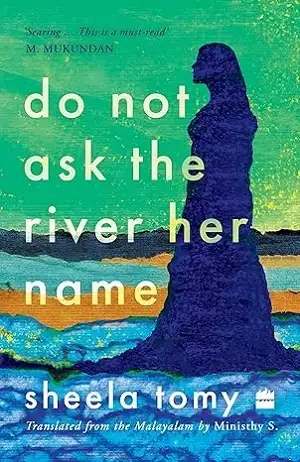
Book Title: Do Not Ask the River Her Name
Author: Sheela Tomy
Publisher: Harper Perennial India
Number of Pages: 328
ISBN: 978-9362139900
Date Published: Jul. 29, 2024
Price: INR 367
Book Review
Sheela Tomy’s novel “Do Not Ask the River Her Name”, translated from Malayalam by Ministhy S, offers a fresh and poignant perspective on the Israel-Palestine conflict through the eyes of an Indian woman. Set against the backdrop of Jerusalem, the narrative blends past, present, and future into a gripping and emotional tale. The novel’s lyrical prose intricately connects characters across continents and decades, questioning the religious and political forces that have fueled the ongoing violence in the region.
The author’s narration predominantly unfolds in Jerusalem, focusing on the theme of displacement and the sense of not belonging. Dedicated “to those who have no place on their birth-soil,” the novel portrays the lives of Ruth, Sahal, and Asher—each grappling with their sense of home. Ruth, originally from Kerala, moves to Jerusalem to support her family; Sahal, a Palestinian poet, is haunted by the destruction of his childhood home; and Asher, an Israeli, struggles with the surrounding turmoil. The interconnected stories of these characters highlight the profound impact of displacement on their lives.
The novel follows Ruth’s journey from the highlands of Wayanad to the deserts of Dubai and finally to Jerusalem, where she works as a caregiver for the Menahem family. Her experience in the Holy Land brings her face-to-face with the region’s complex history and current conflicts. As she navigates her duties and the Menahem family’s conflicting views on the Palestinian situation, Ruth’s interactions with Asher and Sahal blur the lines between historical events and present-day realities. This interplay of past and present creates a fever-dream-like atmosphere, challenging readers to question the nature of historical and prophetic violence.
Check out our Latest Book Reviews
Sheela Tomy vividly portrays the violence and tragedy that permeate Jerusalem, capturing the urgency and despair felt by its inhabitants. The novel depicts scenes of destruction and loss, such as the death of an old man who offered tea the previous day and Sahal’s harrowing accounts of wading through rubble. These elements underscore the novel’s exploration of war’s devastating effects on individuals and communities. Through Sahal’s posthumous memoir and Ruth’s observations, Tomy emphasizes the necessity of listening to those who have endured such horrors.
In “Do Not Ask the River Her Name”, Sheela Tomy weaves a complex narrative that explores themes of displacement, migration, and the search for identity. The novel reflects on the impact of historical and religious conflicts on individual lives and highlights the enduring human spirit. Through Ruth’s journey and the interconnected stories of the characters, Tomy illustrates the river of love and humanity that flows despite the boundaries of nationhood and religion. This evocative and thought-provoking novel offers a valuable perspective on the struggles and resilience of those affected by the Israel-Palestine conflict.
Books are love!
Get a copy now!