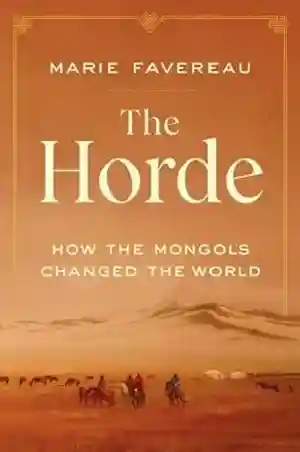
Book Title: The Horde: How the Mongols Changed the World
Author: Marie Favereau
Publisher: Belknap Press
Number of Pages: 384
ISBN: 978-0674299399
Date Published: Sept. 20, 2024
Price: INR 321
Book Review
“The Horde: How the Mongols Changed the World” by Marie Favereau offers a refreshing and deeply researched exploration of the Mongol Empire, with a focus on the Golden Horde. Moving beyond the common view of the Mongols as just conquerors, Favereau delves into the complexities of their empire, highlighting their roles as city builders, diplomats, and innovative economic thinkers. This compelling history spans 300 years and showcases how the Mongols’ influence stretched from Europe to the Middle East, leaving a profound legacy that continues to shape our world today.
Author Favereau takes readers inside the Golden Horde, which thrived after the death of Genghis Khan under the leadership of his grandson, Batu Khan. The Horde was more than just a military power; it became a central force in Eurasian trade, driving economic and cultural exchanges across vast territories. From their capital at Sarai, the Mongols managed an efficient and mobile empire that was organized and adaptable. They fostered political stability, religious tolerance, and innovative governance, which influenced Russia, Central Asia, and the broader Islamic world.
One of the most fascinating aspects of this book is how Favereau dismantles the stereotypical image of the Mongols as barbaric invaders. Instead, she presents them as a dynamic and pluralistic society that integrated with the regions they ruled. The Golden Horde was not just about conquest but about fostering trade, diplomacy, and cultural exchange. Favereau also sheds light on their ecological challenges, which played a significant role in limiting their westward expansion, often overlooked in traditional narratives.
While the book provides an in-depth look at the political and economic mechanisms of the Horde, it also touches on darker aspects like the trade in enslaved people, which Favereau rightly refers to as “human trafficking.” This nuanced approach avoids idealizing the Mongols, giving readers a balanced view of their civilization. The Golden Horde’s nomadic governance, which allowed flexibility and adaptability, offers a fascinating counterpoint to the sedentary states it interacted with, showing how their system fostered a stable and prosperous empire.
Check out our Latest Book Reviews
This book is a must-read for anyone interested in Mongol history or world history in general. It offers a fresh perspective on the Mongols’ legacy, showing how their empire was far more than a fleeting moment of conquest. The decline of the Golden Horde, marked by internal conflicts and environmental challenges, adds a poignant sense of tragedy to the narrative. Rich in detail and analysis, “The Horde” is a captivating read that will leave readers with a newfound appreciation for the Mongol Empire’s lasting impact on global history.
Books are love!
Get a copy now!