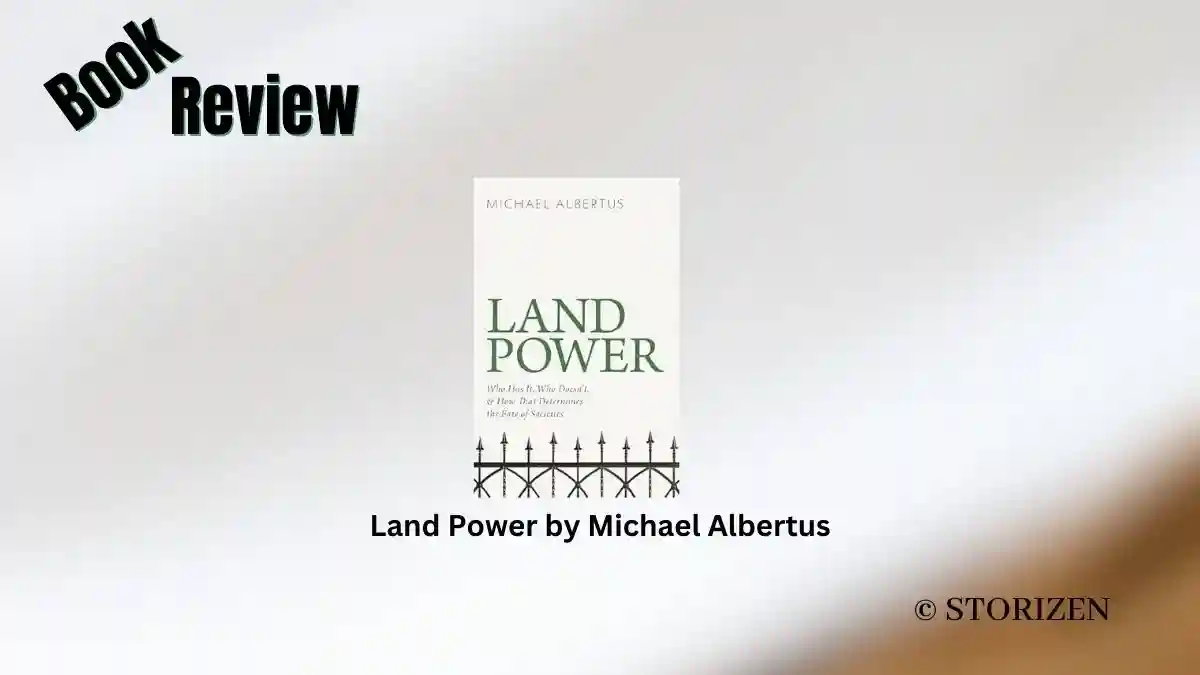
Book Title: Land Power: Who Has It, Who Doesn’t, and How That Determines the Fate of Societies
Author: Michael Albertus
Publisher: Basic Books
Number of Pages: 320
ISBN: 978-1399814331
Date Published: Feb. 27, 2025
Price: INR 579
Book Review
For centuries, land ownership has been a marker of wealth and privilege, but its impact extends far beyond economic status. In “Land Power: Who Has It, Who Doesn’t, and How That Determines the Fate of Societies,” political scientist Michael Albertus examines how land distribution shapes societal equality, economic prosperity, and environmental stability. From European colonial expansion and Indigenous land dispossession to 20th-century collectivization and contemporary state-driven reallocations, land ownership has determined both advancement and oppression. Drawing on extensive research and fieldwork, Albertus argues that land policies have reinforced poverty, sexism, racism, and environmental crises—but also hold the potential to reverse these issues. The book emphasizes that the fate of societies depends on how land is managed.
Michael Albertus became interested in land distribution through his broader study of inequality and democracy, recognizing its role in shaping economic and political power. His research in Latin America reinforced this perspective, revealing how land ownership continues to define social structures and opportunities. He introduces the concept of the “Great Reshuffle,” a period of land redistribution driven by population growth, state-building, and political change over the past two centuries. These transformations, he argues, have had lasting global effects, influencing wealth distribution, political stability, and social hierarchies.
Divided into three parts, “Land Power” first explores the historical shifts in land ownership and their consequences. Part II examines how land policies have fueled racial and gender inequalities, economic disparities, and environmental degradation. Through global case studies, Michael Albertus highlights the systemic marginalization of Indigenous peoples, the exclusion of women from land ownership, and the environmental destruction caused by land mismanagement in countries like China and Brazil. He demonstrates how these entrenched patterns continue to shape contemporary societies.
Check out our Latest Book Reviews
Despite these challenges, Michael Albertus presents examples of successful land reforms in Part III. He showcases Peru’s property rights revolution, Colombia and Bolivia’s efforts to extend land ownership to women, and Chile’s large-scale conservation initiatives. He also discusses ongoing land restitution programs in South Africa and Australia, underscoring their role in addressing historical injustices. Looking ahead, Michael Albertus examines the pressures of urbanization, climate change, and economic development, arguing that land policy remains a powerful tool for promoting equity and sustainability. Ultimately, “Land Power” provides a compelling vision for reshaping land ownership to create a more just and prosperous future.
Books are love!
Get a copy now!