
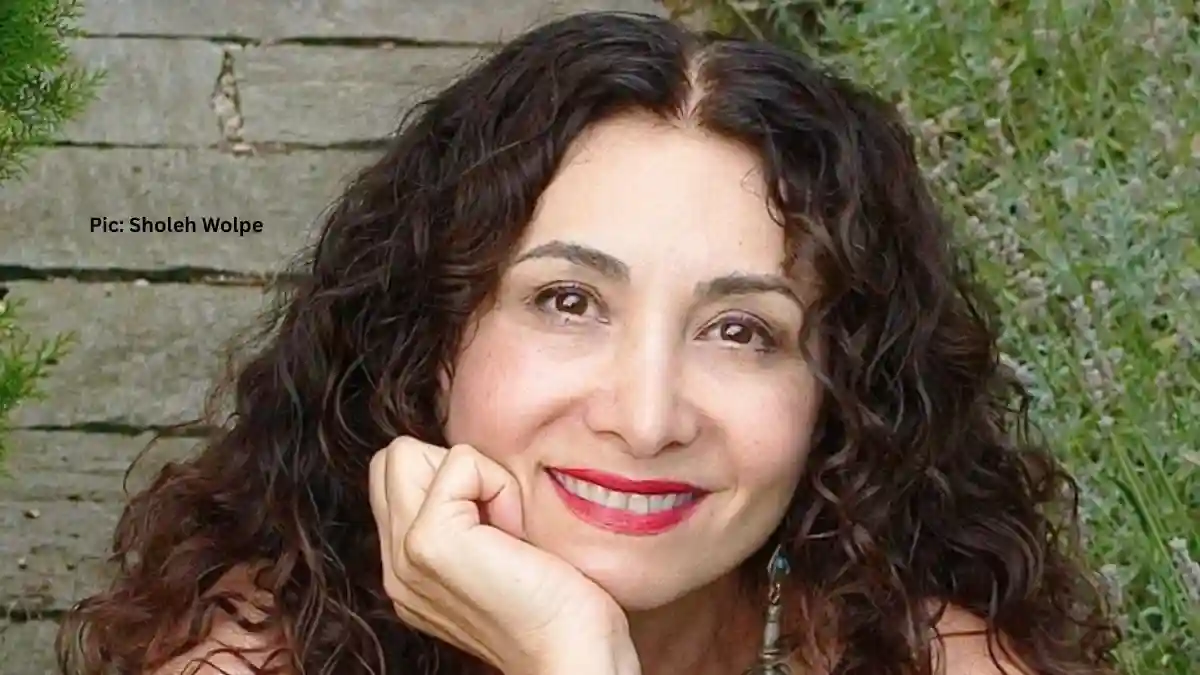
In this illuminating conversation with Storizen, acclaimed poet and translator Sholeh opens a window into the making of The Invisible Sun, her transformative new rendering of Attar’s Sufi masterpiece. With her signature clarity and lyrical insight, Sholeh reflects on what first drew her to Attar’s mystical world, how she navigates the spiritual and linguistic subtleties of Persian poetry, and why these centuries-old teachings feel uncannily urgent today. From the challenge of translating a genderless spiritual lexicon into English to her mission of preserving Attar’s radical inclusiveness, she reveals how this work reshaped not only her craft but her way of seeing. In an age of distraction and digital noise, Sholeh’s voice reminds us why poets like Attar and Rumi still matter—offering readers a steady, luminous path back to meaning.

The Invisible Sun centers on Attar’s profound Sufi mysticism and the soul’s journey. What drew you to this particular work, and how do you feel its lessons resonate with today’s readers?
I have always been drawn to this luminous body of work, but my deeper engagement began when I grew disillusioned with how organized religions have been used—to divide us, to police us, to strip away our essence. At their core, these traditions were born of love, tolerance, and the human longing for the Divine.
Attar’s poetry felt like a corrective. It is gorgeous literature, but also a map—precise, inspiring and profound—charting the souls’ journey toward what is Real. Translating him became a way to return to that essence without the noise of dogma.
His guidance transcends religious and cultural boundaries, which is why it resonates so powerfully with readers today. We are hungry for meaning, for clarity, for a path that does not demand obedience, but invites awakening.
Attar’s work belongs to humanity, not a single tradition. And in our polarized world, his message feels ugently needed. – Sholeh Wolpe
In your translation, Attar’s guidance to abandon the ego stands out. How do the poems reinterpret traditional Sufi ideas for a modern audience seeking meaning beyond material life?
What I love about Attar is his clarity: he never condemns material life—our work, home, comforts. He warns us only about our attachment to it. The lower-self—the ego—is what he calls a “cyclone of calamities,” a force that clouds our vision and intensifies our clinging to illusions.
He reminds us not to confuse the reflection on the ocean with the ocean itself. For him, ego is the source of self-righteousness, judgment, and that relentless “me, me, me” that keeps us stagnant.
And he challenges our compulsive naming of the Divine. The moment we try to place the Boundless in a box, we have already made a mistake. These ideas are astonishingly contemporary, aren’t they? They ask us to loosen our grip on certainty, to see more clearly and to step toward the unseen with humility.
The text is notable for its universal spiritual appeal across religious boundaries. How did you approach translating these broader themes to maintain their inclusiveness and accessibility?
Attar says you should be able to walk into a church, a mosque, a temple—or a place of idolaters— and see only the Beloved. This is radical inclusiveness! He warns us not to be fooled by forms, categories, or inherited beliefs. You have been given eyes, he essentially says, so use them.
My task as a translator, or rather, re-creator, was to preserve his expansiveness. I wanted the language to feel open, undogmatic, porous—inviting readers from any background to walk through the doorway.
Attar’s work belongs to humanity, not a single tradition. And in our polarized world, his message feels ugently needed.
Many of Attar’s poems in this collection highlight suffering as integral to transformation. How did this theme influence your selection and presentation of the verses?
Attar knew that progress without pain is impossible. Anyone who has let go of old ideas, habits, or illusions understands this intimately.
The suffering he speaks of is rarely physical. It is the ache of awakening, the discomfort of seeing ourselves clearly, the shedding of what no longer serves us.
I chose poems that illuminate this inner labor—the quiet, persistent work of growth. These verses make clear that suffereing is not punishment. It is the fee we pay for transformation.
Could you share an example where Attar’s language, imagery, or metaphor particularly challenged or inspired you during the translation process?
Language itself posed one of the greatest challenges. Persian has no gendered nouns or pronouns. English depends on them. I refused to impose gender where the original held none, especially in a work where both the soul and the Divine are beyond gender.
Finding a way to preserve that essential genderlessness—without creating awkward or alienating English—required craft, patience, and sometimes sheer stubbornness (which I had plenty of.) It was particularly difficult in The Conference of the Birds (W.W.Norotn), But I found solutions that honored Attar’s spirit and kept the English fluid. The struggle ultimately expanded my own poetic toolkit.
Check out our Latest Book Reviews
You have translated major Persian poets, including Forugh Farrokhzad and other Sufi masters. How has working on Attar’s poetry influenced or expanded your own perspectives as a poet and translator?
Translation has sharpened both my ear and my intuition as a poet. While I lend my own poetic language to the texts, I also learn from their architecture, their daring, their emotional clarity.
Abacus of Loss, my memoir in verse, is shaped by the hybrid form I devised for The Conference of the Birds—the braid of prose and poetry that creates a narrative atmosphere the reader can step into.
From Attar, I learned how to guide without preaching, how to evoke the invisible, how to build silence into structure. He changed not only how I write, but how I see.
Having lived across Iran, Trinidad, the UK, and the US, how do your cross-cultural experiences inform the way you adapt Persian mystical poetry for an international audience?
I have lived in many places since the age of thirteen. I have often stood on the margins, labeled “the other,” an outsider looking in. Engaging deeply with Attar taught me that these divisions are illusions—categories we accept because the world insists on them.
I cannot control how others perceive or mis-perceive me. But I can control how I perceive others and how I inhabit this world. That realization threads through my translations. I try to create language that welcomes, clarifies, and connects, so that a reader in any corner of the world can feel addressed rather than excluded.
My task as a translator, or rather, re-creator, was to preserve his expansiveness. I wanted the language to feel open, undogmatic, porous—inviting readers from any background to walk through the doorway. – Sholeh Wolpe
In a world dominated by artificial intelligence and digital noise, why do you think reading poets like Rumi—and by extension, his master Attar—remains vital for the human soul today?
I have nothing against AI—no more than I have anything against Brazil nuts. A couple can give you the selenium you need. Too many can damage your nerves. AI is a tool, not a threat. The danger lies in our dependence, not in its existence.
Attar and Rumi remind us that our greatest enemy or ally is always ourselves. They call us back to presence, discernment, and inner spaciousness. In a world where we reach for our phones before we reach for our thoughts, their voices serve as quiet, steadying companions.
Instead of scrolling before bed or upon waking, open The Invisible Sun. Let the page you land on shape your day. This is the kind of technology the soul understands