

Book Title: A Flag to Live and Die For: A Short History of India’s Tricolour
Author: Navtej Sarna
Publisher: Aleph Book Company
Number of Pages: 154
ISBN: 978-9365238655
Date Published: Jan. 10, 2026
Price: INR 389
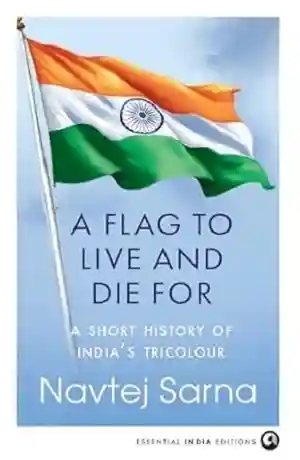
Book Review
“A Flag to Live and Die For: A Short History of India’s Tricolour” by Navtej Sarna masterfully traces the evolution of India’s national flag from ancient symbols to its adoption in 1947. Drawing on historical events like the Nagpur Flag Satyagraha and key figures such as Pingali Venkayya and Mahatma Gandhi, the book reveals how the tricolour became a potent emblem of resistance and unity during the freedom struggle.
Author Navtej begins with ancient Indian references to flags in epics like the Mahabharata and early nationalist designs, including Annie Besant’s Home Rule flag and Gandhi’s Swaraj flag with its charkha symbolizing self-reliance. He details Pingali Venkayya’s pivotal role in 1921, designing a tricolour representing communities—white for others, green for Muslims, red for Hindus—later refined to emphasize unity over division. The narrative highlights satyagrahas where the flag challenged British authority, transforming it into a rallying point for mass mobilization.
Check out our Latest Book Reviews
The book explores 1931 Congress debates shifting colors to saffron (courage), white (truth), and green (faith), replacing communal interpretations with universal ideals, amid opposition from groups like the Muslim League favoring green. By 1947, the Constituent Assembly adopted the final version, substituting the charkha with the Ashoka Chakra for symmetry and ancient symbolism of dharma and progress, as Nehru emphasized its aesthetic and non-communal essence. Sarna captures tensions, including Gandhi’s initial reservations, underscoring the flag’s shift from protest symbol to sovereign emblem.
Navtej Sarna’s diplomatic background lends precise, engaging prose, blending anecdotes—like flags sewn from prison clothes—with scholarly depth on rivalries from RSS’s bhagwa to League’s crescent. Accessible yet insightful, it resonates today amid debates on national symbols, reminding readers of the sacrifices that made the tricolour sacred. This concise history (around 150 pages) is essential for understanding India’s identity formation.
Books are love!
Get a copy now!