What happens when razor-sharp wit collides with murder, mayhem, and a heroine who refuses to play by the rules? You get Katy Brent’s wildly addictive Kitty Collins series—a darkly comic crime phenomenon that has captivated readers with its fearless blend of satire, suspense, and social commentary. Often described as a “stabby Sex and the City” with a dash of Dexter, Kitty’s journey has evolved from a glamorous London socialite with a deadly secret into one of contemporary crime fiction’s most unforgettable anti-heroines. In this candid conversation with Storizen Magazine, bestselling author Katy Brent opens up about Kitty’s evolution, balancing humour with hard-hitting themes, the influence of her years in lifestyle journalism, and the darkly fascinating worlds that continue to inspire her fiction.

Pitching Kitty Collins as a “stabby Sex and the City” is such a killer hook. Did you always picture her story spanning a full trilogy, or did her path widen as you wrote?
It wasn’t planned as a trilogy at all. I was just really, really happy to get one book published. My initial contract was actually a two-book deal, and we never planned to do a sequel. The second book, The Murder After the Night Before, was conceived as a standalone thriller without Kitty Collins.
By the time we came around to writing my third book, it had become obvious how popular Kitty had been, and we really wanted to revisit her story. I was incredibly excited because I wanted to take her beyond London, where the first book was set.
Kitty is very much a Made in Chelsea-type English girl, and a lot of my inspiration for her came from binge-watching Sex and the City during lockdown. I had this dark idea that it would be interesting if someone with a glamorous Instagram-perfect life was hiding something much darker beneath the surface—real skeletons in the closet, or even bodies in the basement.
The books are also about female friendship and how far you would go for the women you love. While I’m not actually a huge Sex and the City fan, I know enough to appreciate the ride-or-die friendship between its four main characters, and I wanted to capture that feeling in Kitty’s world.
Blending laugh-out-loud satire with dark, real-world issues like gender-based violence is a tough line to walk. How do you find that balance without losing the weight of the underlying themes?
It is a very fine line to walk, and it can be difficult. There have definitely been moments where I’ve had to remove things because they felt like they went too far.
The reality is that without the humour, these would be incredibly dark books. Violence against women is, unfortunately, a global issue. Every day we hear terrible stories about women being murdered, assaulted, trafficked, or abused. Without comedy, the books would be overwhelmingly bleak.
I think humour creates a way into those conversations. It allows readers to engage with difficult subjects without feeling completely overwhelmed by them. The issues themselves remain serious, but the dark comedy makes them more accessible.
The way the men die in the books is deliberately exaggerated and comedic. Without that, everything would feel even darker. It’s a form of black humour. I won’t give away spoilers, but there are scenes in the latest book that are intentionally ridiculous. Some critics have called the books unrealistic—and of course they are. If they were realistic, women would be doing this all the time.
For me, the more absurd and outrageous a villain’s downfall is, the more satisfying it can be. The humour helps balance the darkness while still allowing readers to think about the issues underneath.
You spent over a decade in lifestyle journalism—how much of that fast-paced background feeds into your sharp dialogue, pop-culture nods, and rapid story pacing?
I spent about fifteen years writing about pop culture and lifestyle topics, and that background has definitely influenced my work in a huge way.
My books are naturally contemporary because that’s the world I’m drawn to. I don’t think I could ever be a very forensic crime writer. I have enormous admiration for authors who write detailed legal thrillers or police procedurals, but that’s simply not my background.
For me, there will always be elements of consumer culture, celebrity culture, social media, and lifestyle journalism woven into my stories.
It’s what interests me most.
Of course, I’d love to write something as brilliantly twisty as Gone Girl or The Girl on the Train, but I can probably tell you more about the Kardashians than criminal procedure. Thankfully, I don’t think that’s a bad thing. Those worlds can work really well together.
The success of Kitty Collins has shown that readers enjoy that blend of crime, humour, glamour, and contemporary culture. So while you probably won’t get an intensely literary prize-winning thriller from me anytime soon, you will get fascinating characters and stories inspired by the kinds of people and worlds I find endlessly intriguing.
Kitty is often dubbed a “female Dexter.” Why do you think readers are so captivated by an anti-hero who takes justice into her own hands?
I actually think “female Dexter” is a pretty good description of Kitty, although there are important differences.
Dexter is much more of a psychopath. He genuinely wants to kill. I don’t think Kitty does. She was perfectly happy living her glamorous life before she became increasingly aware of the injustices women face.
She sees herself as a vigilante—a bit like Batman. In her mind, she’s stepping in because the people who are supposed to protect women often aren’t doing enough. We still see low conviction rates for sexual assault and domestic abuse, and many women feel that justice simply isn’t available to them.
During my research, I learned things that genuinely shocked me. For example, women in the UK couldn’t have their own bank accounts without a husband’s permission until relatively recently in history, and marital rape wasn’t criminalised until 1991. These realities highlight how recent many women’s rights actually are.
I don’t condone murder, of course, but I understand why readers respond to a character who is determined to fight for women who haven’t received justice. Kitty embodies that anger and frustration.
I think she’d love being compared to Dexter, although she’d probably object to being called a psychopath. If anything, Antoinette, whom readers meet in To All the Men I’ve Killed Before, is far more inclined toward psychopathic tendencies than Kitty is.
Looking back, how has Kitty evolved from the version we first met to the woman in To All the Men I’ve Killed Before?
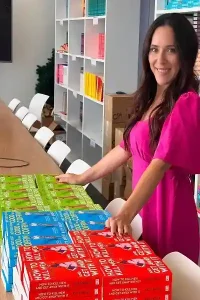
Kitty has changed enormously since we first met her in How to Kill Men and Get Away With It.
At the beginning, she’s angry. She’s angry that someone followed her home and believed they were entitled to something from her simply because they’d bought her a drink. Most women have experienced situations where politeness feels like a survival mechanism, and Kitty reaches a point where she refuses to be polite anymore.
What happens afterward shocks her. It forces her to confront how vulnerable she can be and how often women experience similar situations.
As the series progresses, we learn much more about her emotional side. One of the reasons I don’t see her as a psychopath is because of how deeply she loves Charlie. Charlie is important because he reminds readers that there are good men in these books. The same is true of characters like Rupert. Not every man in Kitty’s world is a villain.
By the third book, Kitty has also realised she can’t save the entire world by herself. Antoinette believes they can take on every injustice everywhere, but Kitty has become more aware of her own limits.
At the same time, she’s probably angrier than ever in To All the Men I’ve Killed Before. This hunt becomes deeply personal. Aiden Ward hurts her in a way that leaves lasting emotional scars. We also learn more about the people she loves and the lengths she’ll go to protect them.
Ultimately, Kitty wants what most people want: love, connection, and safety for the people she cares about.
Writing romance for a character whose moral code is so extreme can’t be easy. How do you construct love interests when your protagonist’s red lines are completely non-negotiable?
I actually didn’t find it particularly difficult because Kitty needed someone like Charlie.
Without Charlie, I genuinely think she would end up in prison. He softens her. He gives her a reason to stay safe and grounded because she loves him so much.
We see throughout the series how much his opinion matters to her. His disappointment hurts her deeply, and when she thinks their relationship might be over, she’s devastated. Those moments remind readers that Kitty isn’t simply a killing machine. She’s human.
She experiences love, jealousy, heartbreak, hope, and vulnerability just like anyone else. The romance helps reveal those sides of her character.
As a writer, I also enjoy the balance it provides. Spending all day writing about murder can be quite intense, so it’s nice to have moments of warmth and emotional connection. Who knows—future books might even contain a little more romance.
Your book titles are absolute showstoppers. Do those sharp, provocative names hit you before you write, or do they pop up naturally out of the manuscript?
Titles actually have much less to do with the author than people think. Publishers and publicity teams are often heavily involved in that process.
Of course, if there’s a title we absolutely hate, we can push back. But generally, it’s a collaborative decision.
To All the Men I’ve Killed Before was actually my first-choice title, and thankfully I didn’t have to fight very hard to keep it.
How to Kill Men and Get Away With It was partly my idea. The original title was How to Kill Men and Influence People, but we worried not everyone would understand the reference, so we changed it. I think the final version works better anyway.
The Murder After the Night Before was entirely the work of my brilliant editor, Audrey Linton.
As for I Bet You’d Look Good in a Coffin—that definitely wasn’t my choice, and that’s all I’ll say about that!
With Kitty’s current arc wrapped up, what kind of dark or unexpected themes are you itching to dive into next?
I’m always fascinated by what goes on behind the scenes in the lives of the very wealthy.
My next book is called Date Night, and it’s about nannies who work for extremely rich families. I’m interested in exploring those hidden worlds and the secrets that might exist within them.
To be clear, everything is fictional—it’s just my very dark imagination at work. But there are fascinating dynamics, gossip networks, and social hierarchies in those environments.
Social media also continues to be a major theme in my work. In this book, I’m particularly looking at things like “NannyTok” and the ways online communities shape narratives and perceptions.
I’m very excited about it and can’t wait for readers to see where this story goes next.
Books are love!
Get a copy now!