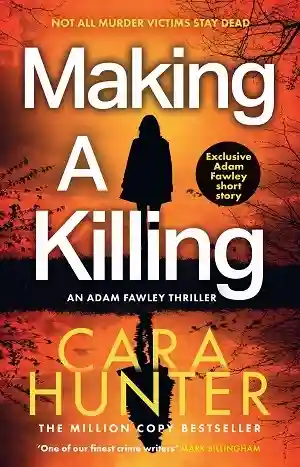
With Making a Killing, Cara Hunter revisits one of the most haunting cases in the DI Adam Fawley series—one that has lingered in readers’ minds long after the final page of Close to Home. Known for her innovative storytelling, razor-sharp psychological insight, and immersive use of mixed-media narratives, Hunter once again challenges the boundaries of crime fiction. In this interview with Storizen, she opens up about returning to the Daisy Mason case, the evolution of Adam Fawley as both detective and man, the chilling creation of the ‘Shadow Self’, and her perspective on writing in an increasingly competitive literary landscape. What follows is a candid and fascinating glimpse into the mind of an author who continues to redefine the genre.
1. “Making a Killing” boldly reopens the Daisy Mason case, peeling back emotional and investigative layers with a psychological edge. What inspired you to return to this haunting case, and how did you approach it differently to reflect both the time that has passed and Fawley’s personal evolution?
I never originally intended to revisit this case, but I did find the characters really compelling and – as anyone who’s read it will know – the epilogue leaves us with some tantalising questions. So much so that there has always been quite a debate about whether the book has a ‘happy ending’ or is actually a looming disaster just waiting to happen (I’m in the latter camp, for the record!). And I’ve had so many requests from readers to go back to the story! ‘We want to know what happened next!’
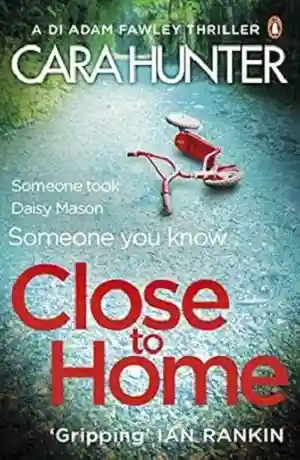
So I decided I would, indeed, write a sequel. The only issue (and I’m trying to avoid spoilers for Close to Home here) is that I needed sufficient time to elapse so that all the characters would have full agency. But writing my standalone,Murder in the Family, gave me exactly the opportunity I needed: the previous Fawley, Hope to Die, had ended with him in 2018, but the intervening book gave me the chance to bring Adam up to date and set Making a Killing in 2024, eight years after the original case.
Eight years is a long time, and some of those years I was glad to omit (lockdown, for example!), but there were other things I knew my readers would want to know – what’s happened in the lives of the police characters in that time? Especially those, like Erica Somer, who was last seen facing a personal and professional crisis. And what about Adam himself, his career, his new fatherhood, his marriage? All of that was a joy to explore, and in fact there’s a separate short story accompanying the book, which fills out more of Adam’s personal evolution, which I think readers will really enjoy.
I’d never heard of Shadow Work before but just that title had me clicking through to learn more. It turned out that it was a self-help manual based on the psychological theories of the early twentieth-century psychiatrist Carl Jung. – Cara Hunter
2. Your signature fragmented narrative—mixing transcripts, emails, headlines, and the eerie ‘Shadow Journal’—makes readers feel like detectives themselves. How do you craft this intricate puzzle while still ensuring readers remain emotionally connected to the characters and the case?
As your readers will probably know, this is the part of the writing process that I enjoy the most! As you rightly say, it’s all contrived to give the reader a chance to solve the case themselves (and I took it even further in Murder in the Family, where there is no authorial voice at all).
The technical question about maintaining empathy within a structure like this is a very insightful one. I can’t pretend I sat down and asked myself that question before I started – it was far more instinctive than that. But the answer, I think, is that I write all the narrative sections first. So, in essence, I write a ‘conventional’ crime story, including all the sections where we see Adam and his colleagues in their personal lives. It’s only then, with that draft complete, that I go back and interweave all the mixed media items, so that those documents and narratives bring something richer to the mix in plot terms, but don’t substitute for good old-fashioned character development. The exception to that, in Making a Killing, was the Shadow Journal. Now that I did plan as I went along…
3. The ‘Shadow Self’ voice adds a chilling psychological depth, almost inviting readers into the mind of a manipulative presence. What challenges or surprises did you face in developing this dual perspective, and how did you ensure it heightened the suspense without giving too much away?
Again, I’m going to have to be careful about spoilers here! I always knew that if I was going to revisit this case there would be one character who would have to appear in the first person, and speak in their own words. Readers were always going to want to get inside the mind of this character, and to be honest I did as well! The challenge, though, was that Adam already speaks to us directly, in his own voice. So I needed an approach or a vehicle that would be sufficiently distinctive to avoid any confusion in the reader’s mind, and, ideally, add something new of its own. And then, out of the blue, serendipity: I saw an ad on Instagram for The Shadow Work Journal, by Keila Shaheen.
I’d never heard of Shadow Work before but just that title had me clicking through to learn more. It turned out that it was a self-help manual based on the psychological theories of the early twentieth-century psychiatrist Carl Jung. He believed that each human psyche has its own ‘shadow’ which harbours the dark aspects of ourselves: characteristics we dislike, experiences we have repressed, pain we have not resolved, impulses that cause us guilt or shame. Jung contended that it is only by bringing this dark shadow into conscious thought and confronting it that we can achieve a whole and healthy self. That’s what ‘shadow work’ is: a structured approach designed to help people address and reintegrate their dark side, and there are many apps, books and websites out there offering ways to do this.
And there it was – the answer to my narrative conundrum. I could create my own fake ‘shadow work app’, which would not only look and feel entirely different from Adam’s narrative but give my readers a chilly insight into the mind and motivation of a psychopath. I’m really proud of this aspect of the book, I think it’s genuinely new and innovative, and I managed tgo thoroughly creep myself out writing it!
4. The DI Adam Fawley series has captivated readers and topped bestseller charts with each book. What sparked the idea behind the gripping storyline of Making a Killing—and can fans expect another twist-laden case on the horizon after this one?
The story came to me – as so many do – as a visual image of an almost cinematic intensity: a gloomy woodland, an old and twisted and almost human-looking tree, and beneath it a shallow grave. A grave where the police discover the impossible: the recently deposited DNA of a child who’s been dead for over eight years…
As for what’s next, another standalone! Similar in format to Murder in the Family, but not exactly the same. But as with that book there’s no authorial voice in the next one, just transcripts, documents, photos, maps, and the same challenge to the reader to get in and solve it first!
Also Read: Suspense/Thriller Picks
5. What’s your take on today’s generation of writers and the evolving landscape of storytelling? If you could offer one piece of advice to emerging authors navigating this space, what would it be?
Crime fiction, in particular, is incredibly crowded! So many fabulous writers a lot of them women, which is fantastic), and so many great books. Some are not so good, of course, but the sheer volume of crime books being published makes it a really competitive landscape where it’s near-nigh impossible to get your book noticed, however brilliant/well-written/creative/original it might be.
I don’t have any magic advice to give to new authors embarking on this journey – I wish I did! – but my own experience has been that an environment like this makes the role your publisher plays even more important. You can write the best book in the world, but it will only get noticed if you have great PR, excellent marketing, and significant visibility, not only online but, crucially, for your physical book. That’s all about having the support of a really professional sales operation, alongside efficient distribution and great relationships with book retailers. I’ve been really lucky to have that, all across the world, with all my different publishers.

6. Is there a core philosophy or guiding belief that shapes both your writing and the way you approach life? How has it influenced the stories you choose to tell?
One thing I have always believed is that you make your own luck, and the way you do that is by working hard. There’s a saying which I love, which is that the reason most people miss opportunities is because those opportunities turn up wearing overalls and looking like work.
Well, I’ve never been afraid of hard work! Everything I’ve achieved in life has been down to my own efforts, and the luck I’ve had – like being selected for the Richard & Judy Book Club for Close to Home – could only have happened because I’d worked hard to be in that place at that time. So, to go back to your last question and my advice to emerging writers – yes, this publishing environment is really tough and you definitely will need a lot of luck, so roll your selves up and make sure you’re in the best possible place to seize that luck when it does come.
Also Read: Book Review: ‘Murder in the Family’ by Cara Hunter
As this conversation reveals, Cara Hunter’s brilliance lies not only in crafting ingenious plots but in her relentless curiosity—about human psychology, narrative form, and the moral grey spaces that define real life as much as fiction. From revisiting unresolved truths to experimenting fearlessly with structure, Making a Killing stands as a testament to her belief that hard work, innovation, and emotional honesty are the true drivers of success. As readers eagerly await her next standalone puzzle, one thing is certain: Hunter’s stories will continue to provoke, unsettle, and invite us to look closer—because sometimes, the darkest answers are hidden in plain sight. Curated by Storizen, this interview celebrates an author at the height of her creative power.
One thing I have always believed is that you make your own luck, and the way you do that is by working hard. – Cara Hunter
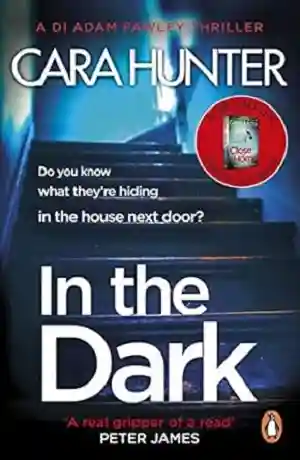
Some of the Books by Cara Hunter


Books are love!
Get a copy now!