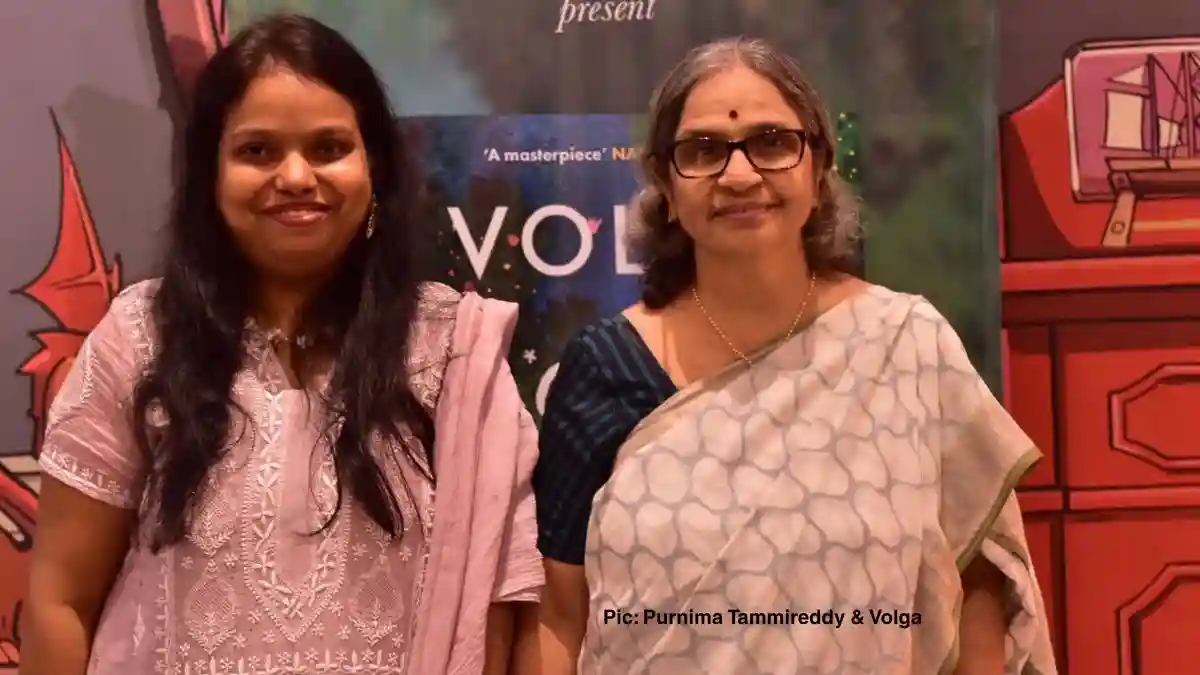
Myth retellings often carry within them a double gaze—toward the past that shaped them, and the present that reimagines them. On the Banks of the Pampa, the concluding volume in Volga’s feminist trilogy, offers such a gaze through the story of Sabari, the forest-dweller whose fleeting presence in the Ramayana expands here into a meditation on caste, power, ecological destruction, and resistance. In this conversation, the author and translator reflect on Sabari not just as a figure of devotion but as a voice of dissent, a custodian of the forest, and a quiet critic of conquest-driven dharma. We explore how mythology becomes a medium for environmental consciousness, how spiritual life intersects with political resistance, and how the challenges of translation can carry forward both the rootedness and the fire of Volga’s original Telugu prose.

Sabari’s tale, as retold in the novella, becomes a voice of dissent against systems of oppression. What inspired you to choose her brief episode from the Ramayana written by Volga to explore such potent themes of caste, power, and ecological destruction?
Volga: Sabari, a forest dweller is waiting for Rama. Why? That question bothers me since long time. In Valmiki Ramayana when you read Aranya parva, the forest near Pampa was described very beautifully and Sabari ripe with age is waiting lonely.Why? I thought ——as a forest dweller she had many concerns about nature. Near her Ashram Vali and Sugriva are at war for kingdom. All these wars and kingdoms, power struggles might disturb her. If someone says that Rama disowned the throne and came to live in forests, she might want to see him and want to ask him to protect the forests and nature from the mighty expansion of kingdoms. This thought process of mine also made me think about the contemporary environmental destruction by the greedy and powerful men. Earth or nature has become a thing to conquer for men from centuries. Now destruction beyond our control is taking place. Tribal people are suffering, struggling alone with mighty forces. Caste discrimination continues in its violent forms after 75 years of our constitution, one of the best in the world.All these things disturbed me and the novel took its shape.
The greatest challenge was carrying over the rootedness of Volga garu’s prose without turning it into something exotic or inaccessible. Her Telugu has an earthy cadence, its idioms feel lived in, and its cultural references are so seamlessly woven into daily life that native readers don’t even pause to decode them.
-Purnima Tammireddy
The narrative underscores the conflict between conquest-driven dharma and an ethic of care rooted in the forest. How do you envision Sabari as a counterpoint to Rama—not as a challenger, but as a silent critique of hegemonic ideals?
Volga: I believe that Aranyavasis are different in dealing with nature. We always used to undermine their culture, knowledge and thought process. They are not driven with idea of conquest and greed as nagaravasis. By the time Rama entered the forest small kingdoms were already there in forest areas. Of all characters of Ramayana Sabari was the only character who didn’t have anything to do with kings and kingdoms. She was a aranyavasi to the core. So, I made her a critic of Rajyam, expanding kingdoms by destroying forests and Raja dharma, nagarikata and many things nagaravasis are proud of. I think she was the right person to critique what kings believe and practice.

In many traditions Sabari is revered for her devotion, but in your retelling, she is also an agent of resistance and self-realization. How did you balance her spiritual journey with her political awakening while translating?
Volga: In Valmiki Ramayana Sabari is waiting for Rama with devotion. I understood that devotion as love and respect. If Sabari knew that Rama sacrificed his throne and came to live in forests, Sabari naturally respect him and waiting to share her life experience and need to protect nature.
Spiritual and resistance are not opposite ways of life to each other.
Spiritual life not only limited to devotion, religion, dhyanam, prayer, meditation and other forms of worship. In my opinion spirituality is doing good and being good. Being responsible for fellow human beings and nature. In doing good sometimes resistence may be needed.Buddha also resisted vaidika dharma and found a new spiritual path.
The recent example is Gandhi who is highly spiritual and resisted a mighty empire. May be Sabari was his grandmother. Their devotion to Rama is also same. Sabari died after seeing Rama. With disappointment in my novel.Gandhi died uttering “he ram”.This thought just came to me when I am answering your question. Not when I was writing the novel.
On the Banks of the Pampa is steeped in ecological reverence and critiques exploitation of natural resources. How do you see storytelling—particularly mythological retellings—as a medium for environmental consciousness today?
Volga: If you read Valmiki Ramayana more than half of the book is about nature. He described Forests, rivers, sea, mountains, gardens in such a way that no other poet can match him. He loved nature. So, with the inspiration and insights I got from the original text I wrote my novel which deals with ecology and ecological balance, peaceful and harmonious coexistence between nature and human beings. When you talk about the above things it becomes a critique of contemporary exploitation of natural resources.
Check out our Latest Author Interviews
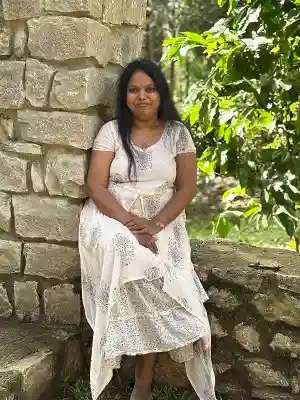
Volga’s original Telugu prose is deeply rooted in local idioms, cultural references, and a distinct rhythm. What were the biggest challenges you faced while translating these elements into English, and how did you ensure the emotional and political intensity remained intact?
Purnima: The greatest challenge was carrying over the rootedness of Volga garu’s prose without turning it into something exotic or inaccessible. Her Telugu has an earthy cadence, its idioms feel lived in, and its cultural references are so seamlessly woven into daily life that native readers don’t even pause to decode them. In English, though, there’s always a danger of either over-explaining and losing the music, or under-explaining and leaving the reader adrift.
My approach was to stay faithful to the emotional charge of each line. Where the Telugu text was lyrical, I tried to find an English rhythm rather than a literal echo. And because her writing carries both tenderness and a quiet political fire, I paid close attention to where her sentences breathe and where they strike. Those pauses, those sudden emphases, preserving that movement was key to keeping the intensity alive.
Ultimately, I saw myself less as a word-for-word conveyor and more as a bridge, ensuring that Volga garu’s vision could step confidently into another language without losing its heartbeat.
If you read Valmiki Ramayana more than half of the book is about nature. He described Forests, rivers, sea, mountains, gardens in such a way that no other poet can match him. He loved nature.
-Volga
Translation is often described as an act of interpretation. In rendering Sabari’s story for a wider readership, how did you navigate the delicate balance between staying true to the author’s voice and allowing space for the text to breathe in a new linguistic and cultural context?
Purnima: Translation is always an act of deep listening first. With Sabari’s story, my aim wasn’t just to transfer words but to stay tuned to the emotional current running beneath them. Volga garu’s voice has a quiet authority and a rooted lyricism—I didn’t want English to flatten that, but I also didn’t want the sentences to feel weighed down by fidelity.
So I asked myself at every step: What is the heartbeat of this passage? If I could carry that pulse across, the text would feel alive in English rather than merely accurate. Sometimes that meant holding on tightly to her phrasing, and other times it meant letting the English breathe in its own rhythm, so the story could move naturally for readers who live outside Telugu cult