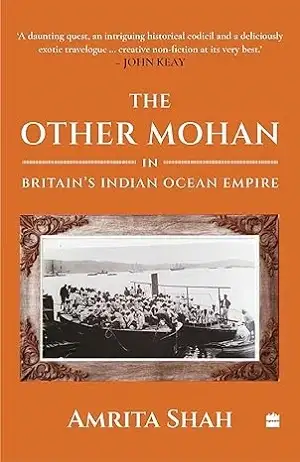
Migration is often told through sweeping historical narratives, yet it is the deeply personal stories that truly bring it to life. In The Other Mohan, the author offers a unique and intimate perspective on the Indian diaspora, particularly through the lens of the indentured labor system. Drawing from his own family’s history, he uncovers the forgotten struggles, resilience, and cultural evolution of early Indian migrants. In this conversation, he delves into the inspiration behind the book, the emotional discoveries made during his research, and the enduring impact of migration on Indian identity today.
1. Migration stories often focus on broader historical events, but The Other Mohan brings an intimate, personal perspective to this vast subject. What inspired you to delve into the lesser-known narratives of the Indian diaspora?
The Other Mohan does delve into the subject of migration but as an Indian living in India my perspective on the subject is very different from a writer who is part of the diaspora. I became interested in the subject because of my great grandfather who went to South Africa at a time of a historic encounter between Gandhi and the colonial administration and came back to India. Following him allowed me to observe the emergence of diasporic communities in Mauritius and South Africa under British dominance. But my project was also very much concerned with understanding what these early stories of migration tell us about the Indian psyche, about our spirit of adventure and enterprise.
The Other Mohan also reflects on the colonial experience, particularly with regard to cultural imperialism and its continued influence in our lives. – Amrita Shah
2. Your portrayal of migration and resilience feels deeply personal. Did you uncover any surprising or emotional stories during your research that shaped the narrative?
My great-grandfather met a woman on his travels and they had a child who grew up to be my grandmother. So of course, there is a very deep personal element in the book which is my search for this anonymous woman who was my great-grandmother. But the personal is a way for me to enter a larger history. In this case I explore the various communities of the diaspora and their socio-cultural histories while trying to discover who she might have been. This search leads me to places and of course to great stories. I came across the fascinating story of a gold smuggler turned jeweller from Bhavnagar in Port Louis who invited some 80 families from his hometown to settle in Mauritius. Then there was a woman who wanted to bring a theatre company to perform in Durban.

3. How did you approach balancing historical accuracy with storytelling, especially in depicting the harsh realities of indentured labor?
It is a shame how little we Indians know about the experience of indenture. 1.3 million Indians, mostly men were transported overseas to toil for the British in their plantations and mines. The conditions of work were harsh and employers were often intolerably cruel. These workers played a critical role in the empire’s colonies. Also, the traders who supplied essentials to the workers and the Indian shopkeepers who trudged into the African wilderness with their goods. I read extensively and studied the many excellent works of local scholars and I also did my own archival research in South Africa, Mauritius, the UK and India.
4. The book highlights the cultural shifts and identity struggles faced by the diaspora. How do you think these historical migrations have influenced modern Indian identity globally?
In places where migration was led by indenture such as Mauritius, South Africa, Fiji and so on, Indians have become a political force. Mauritius and Fiji have had prime ministers of Indian origin. Indians played an important role in the anti-apartheid movement in South Africa. Financially and culturally descendants of early Indian migrants have made an impact. Unfortunately, Indians are only fascinated by the fortunes of Indians in the United States and have no interest in other parts of the diaspora.
Also Read: Book Review: ‘The Other Mohan’ by Amrita Shah
5. What do you hope readers, especially younger generations of Indians, take away from The Other Mohan?
The early Indian migrants both indentured and non-indentured were pioneers. They set out, usually with no resources and often with very little education, and they established themselves in faraway lands. They proved themselves as successful agriculturists traders and entrepreneurs despite hostile conditions and opposition from colonial powers. We in India and overseas could learn a lot from their resilience and their resourcefulness.
The Other Mohan also reflects on the colonial experience, particularly with regard to cultural imperialism and its continued influence in our lives. I think we need to think more about this than we do.
6. After exploring migration and identity in this book, do you see yourself continuing with similar themes in future works, or is there a new direction you’re excited about?
I am interested in the history of trade and other forms of connectedness in the Indian Ocean which is explored in The Other Mohan and I hope to explore this a little in the Gulf and East Africa. I am also interested in cultural imperialism and how it continues to shape contemporary India. So, these themes from the book rather than migration will continue to pre-occupy me.