Blending history, mystery, and social insight with remarkable ease, Harini Nagendra has carved a distinctive space in contemporary Indian fiction. Best known for The Bangalore Detectives Club series, she transports readers to the tree-lined boulevards and bustling social worlds of 1920s Bangalore, where science, politics, food, and everyday life intersect with cleverly plotted crimes. An acclaimed ecologist and academic as well as a storyteller at heart, Nagendra brings a rare depth to her narratives—grounding them in meticulous research while giving voice to women, communities, and histories often left at the margins. In this conversation with Storizen, she reflects on the origins of her beloved series, the making of her unconventional sleuth Kaveri Murthy, and how her twin passions for ecology and storytelling continue to shape her work.
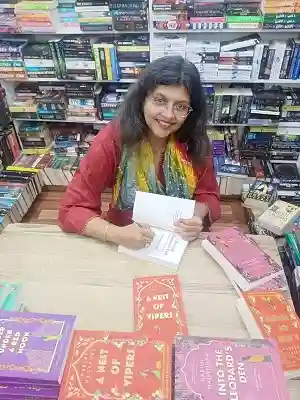
1. Your Bangalore Detectives Club series brings 1920s Bangalore and its vibrant society to life. What inspired you to set your mysteries in this time and place, and how do you balance historical accuracy with storytelling?
In my main profession, I am an ecologist who works on cities. Bangalore is the city I have called home for much of my adult life, and – though I have lived in many parts of the world – it is my favourite city. My academic research on Bangalore, described in my first (nonfiction) book “Nature in the City: Bengaluru in the Past, Present and Future”, draws on a deep dive into the history of the city. Thus, when I conceived of the idea for The Bangalore Detectives Club, in 2007, I was surrounded by historical material on Bangalore. Originally, I had planned to set the series in the 1890s, opening the first book with a plot situated around the time that Bangalore experienced a cholera epidemic – using Nobel Laureate Ronald Ross (who spent some time in the city then, as the main health officer in charge of dealing with the cholera epidemic) as a character. I later decided to move the setting to the 1920s – for multiple reasons.
The 1920s is the classic Golden Age for detective fiction – set in between the first and second World Wars, it is a time of creative ferment, and a time when women around the world are fighting for the right to vote, to work, and lead independent lives. There are all kinds of interesting things going on in the technology and engineering world – my main character Kaveri loves Physics, and I enjoy integrating nuggets of science into the books. Plus, as an ecologist, it’s such joy to sink into 1920s Bangalore and write about the city’s natural beauty – its tree-lined boulevards, emerald-green lakes, the flowers and butterflies, the call of a kite soaring overhead – and a gentler, kinder time when people of diverse faiths and communities worked together to solve common problems.
I am fortunate that I already had a lot of historical material to draw on – including original documents like letters, gazettes and proceedings; newspaper accounts and photographs; biographies and autobiographies – along with secondary accounts from books. Together, these give us a good picture of the powerful in the city – British administrators, wealthy visitors, and Indian men, mostly businessmen and bureaucrats. Missing from this is the story of women, and the subaltern – grazers, fodder collectors, people from oppressed caste groups.
For this, I turn to oral histories. In the course of my ecological research, we have conducted a number of interviews with people of diverse backgrounds, asking them about the lives of their forefathers in the early part of the 20th century. From my own family, I have accounts of the domestic lives of women (and men) inside the home – my paternal grandmother was born in 1909, and my paternal grandfather in 1897 – and I have also collected details about influential women who played a role in shaping Bangalore in the 1920s, including the coffee entrepreneur Doddamane Sakamma, who has been the inspiration for one of the main characters in the series (Lakamma). Putting all of this together, I am able to get a complete picture! And then of course there will be aspects that I fictionalize – where I sometimes deviate from history to serve the purpose of the book, but I take care to explain any minor deviations from historical accuracy in a note to my readers. I have a detailed historical note at the back of the books, where I describe the broader setting in which my books are situated – including what is real, and which parts come from my imagination.
2. Kaveri Murthy(The Bangalore Detectives Club Series) is an unconventional sleuth—curious, mathematically inclined, and navigating early marriage. How did you develop Kaveri’s character and voice, and what aspects of her journey resonate most strongly with you?
Kaveri parachuted into my head, fully formed, one day in 2007 – when I was sitting in my mother’s house, surrounded by a pile of archival documents, looking at all the interesting bits of information about Bangalore that had nothing to do with ecology, and wishing I had a platform to write about them too. Kaveri demanded that I write about her, and I knew at once that it had to be a mystery series – the two genres I read the most are historical mystery fiction and fantasy, and I definitely wanted to situate this book in a real setting, not an imaginary (fantasy) world.
Kaveri came in with a fully developed character and a strong voice of her own, so I didn’t have to try and imagine what she would have been like – she just told me! She also came associated with Ramu by her side, although in the first iterations of the book she was called Bhagirathi, and Ramu was named Lakshmikanth. I suppose subconsciously I was moved by the stories of all the independent women I had read about, who sought to develop lives outside the home – but were often frustrated in their wishes by men who sought to keep them subservient, and in confined spaces. Kaveri was also inspired by the strong women in my own life, who managed to find ways to assert their identities and shape their own spaces, even if things didn’t turn out quite the way they wanted.

Writing about Kaveri’s journey is cathartic for me, because I can show her in the same setting, but write a different ending for her, a happier one – where she has a supportive family, and is able to achieve her dreams – of learning Physics, hopefully becoming a teacher one day, and balancing a full family life alongside a career in science and sleuthing!
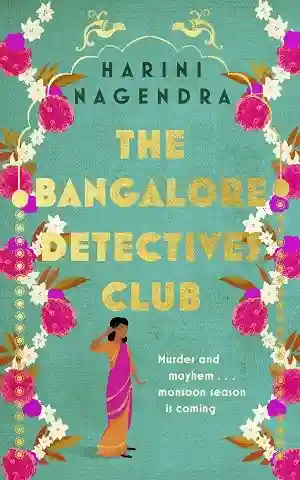
For readers interested in my fiction, I’d recommend they begin with ‘The Bangalore Detectives Club’ – as the first in the series, it sets the stage and setting, and brings Kaveri into focus as a young, feisty, fiercely intelligent heroine interested in solving problems, and setting things right. – Harini Nagendra
3. Many readers appreciate the social themes—like feminism and the independence movement—that run through your mysteries. How do you weave these deeper issues into the cozy crime format without overwhelming the plot?
Thank you! I love weaving these themes into my books, and for each book in the series, I have a sense of what I’m trying to focus on. In ‘The Bangalore Detectives Club’, it was the hierarchies and power imbalances implicit in the interactions between the colonial British and the Indian residents of the city; in ‘Murder Under a Red Moon’, I’m writing about issues of women’s empowerment; and in my latest, ‘Into the Leopard’s Den’, I focus on the capitalist exploitation of forests for coffee, and the human-wildlife conflict it generates in the hills of Coorg.
I do a great deal of research before I begin to write, collecting interesting stories, snippets of information, background context and photographs, newspaper accounts – anything I might use, putting it into a large folder, sometimes years in advance of writing that particular book. Then when I start to write, I throw bits and pieces in. Sometimes I find my enthusiasm has carried me away, and I’ve written pages and pages of historical account – then I go back and cut, and if possible, distribute some of this text through the book so it doesn’t stand out as an info dump.
At other times I find that the background context really doesn’t fit in the book, so I move it to my historical note at the end, for those readers who are really keen to know more about the time and setting. Over time though, I’ve developed a sense as a writer of how to weave in the details I want, to give people an intuitive sense of the broader and deeper issues, while keeping the plot tight and the mystery humming along.
Also Read: The Bangalore Detectives Club by Harini Nagendra
4. The series features rich descriptions of food, city life, and local culture. Can you share your process for researching and recreating the sensory world of colonial Bangalore in your fiction?
Much of this comes from my own life – as a Bangalorean, and someone who is keenly interested in food, I love collecting old recipes. I have a large folder with all of my mother’s traditional recipes written down, which I still like to cook from occasionally, especially during festivals.
When I close my eyes, I can still take myself back to my maternal grandmother’s home, where we usually spent summer holdidays. I recall the taste of my Auvva’ssaaru, which she made using spices dried in the sun (not roasted on the flame), using tomatoes cooked in two ways – boiled with the dal to thicken the saaru, and cut up in pieces and cooked in to add some texture and flavour. I also remember sitting in the courtyard with my cousins, weaving jasmine flowers into garlands, and crunching into fresh sugarcane, harvested from the field.
And watching in fascination while a woman expertly shaped a steaming pile of cowdung into patties and threw them onto a large granite rock on a hot sunny day, drying them to form cowdung cakes used for fuel. These are the little bits and pieces I weave into my stories, to create a sensory world. That’s what makes the books come alive.

5. How did your background in ecology and sustainability influence your path as both a scientist and a storyteller?
I was a storyteller before I became a scientist, and I think that’s what has served me so well in academic life too. I started reading very early – I had a much older sister who was tasked with babysitting me. She taught me to read as quickly as possible so that she could hand me a book, and I would leave her alone for sometime! My sister and I used to play a game where she and I would tell a story together, each taking a turn. We never knew what shape it was going to take, and that was part of the attraction – my daughter and I play the same game today, and it’s still so much fun. I also wrote and published a few short stories for children and adults, before I turned to ecology.
Also Read: Suspense/Thriller Picks
My interest in ecology came from a desire to connect science and academic research with society and societal problems. My earlier training is in microbiology and molecular biology – during my PhD, I switched to ecology, with a concrete plan to weave in a strong element of public communication. In this, I’ve been very fortunate in finding academic homes that enable me to combine my interests in science with storytelling. Science teaches you rigour, gives you practice in writing, and critically, endows you with a thick skin – all academic papers go to at least two anonymous peer reviewers before publication, and some of these reviews can be brutal! I’ve now published over 200 papers, and I find reader reviews to be far more generous and supportive.
Overall, what I love most is the ability I now have to weave storytelling into my ecological writing, especially my popular books like ‘Cities and Canopies: Trees in Indian Cities’, and ‘Shades of Blue: Connecting the Drops in India’s Cities’; and to weave ecology into my fiction, as I’ve done far more intensively in my latest fiction book, ‘Into the Leopard’s Den’.
6. Your career bridges research, teaching, and creative writing. What have been the biggest challenges and rewards in shifting between such diverse professional worlds?
Both professional worlds are very intense – and while I love my academic work and my fiction writing, they can be very energy intensive, especially when deadlines are looming. I find that moving between research, teaching and writing recharges me, keeping me fresh as I rotate between these diverse ways of engaging with the outside world. Engaging with students is often the best part of the day, as students have a way of asking very basic questions that force you to think outside the box, challenging unquestioned assumptions you may not even realise that you hold.
7. Outside of writing and academia, what activities or passions recharge you, and do any of these hobbies find their way into your characters or stories?
I would love to have more time for hobbies, but at this point my science and writing keep me fully occupied! When I do get a bit of time, I have a long list – and growing! – of the things I would like to do. Crochet is one of them. A few years back, I had to quarantine myself because of an infection. Not knowing what to do with my time, I picked up a crochet needle and a ball of thread and was instantly hooked! I have a number of half-finished projects and a bag full of gorgeous, brightly coloured yarn which I must get back to some day.
Jigsaw puzzles are another great way to clear the mind. Every few months, I will open a box from a stash of 1000-piece puzzles that I keep with me, and work on it obsessively for a few days till I have everything done, and my neck is sore from bending over, and my eyes are swollen from squinting at the pieces. It feels terrific, even though I’m not describing it too well!
But what I would really like to have time foris my veena. I’ve grown up in a house full of music – my mother, who is 88, still plays the veena, and started learning Carnatic music when she was three years old. I’ve always seen her playing, and learnt for years – sadly I don’t get much time to practice these days, but my retirement plans include spending a lot of my day immersed in music!
Also Read: 10 Books to Read in May 2024
And finally, I am trying to develop an interest in exercising as a hobby. As you can imagine, both my professions involve a lot of sitting in a chair and writing or typing – terrific for the mind, but unhealthy for the body. I’m lazy by orientation, andhave to force myself to exercise. Now that I’m entering my mid-fifties, I’ve begun to realize I need to find ways to move that are fun and motivating, rather than a dreary task to check off on my to-do list. I love going on long walks in the middle of nature, and I’m trying to find other ways to keep moving which I can also enjoy – dancing being one of them.
Kaveri does play the veena, and in one of the future books in the series, I intend to dive into the world of music in 1920s Bangalore, and showcase Kaveri’s profiency with the instrument. She also learns kalarippayattu, which she has used on occasion to tackle and overpower criminals – this is wishful imagination for me, I would have loved to learn a martial art too – perhaps some day.
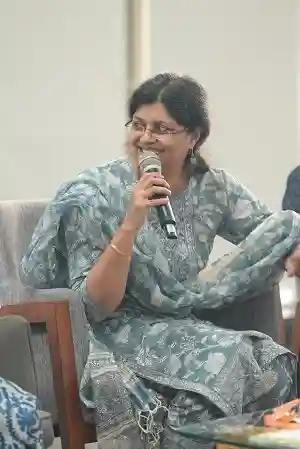
8. For new readers meeting you for the first time, which of your books would you recommend they start with, and why?
For readers interested in my fiction, I’d recommend they begin with ‘The Bangalore Detectives Club’ – as the first in the series, it sets the stage and setting, and brings Kaveri into focus as a young, feisty, fiercely intelligent heroine interested in solving problems, and setting things right. Kaveri roots for the underdog, and works with a club of eccentric and interesting characters: her supportive husband Ramu, policeman friend Inspector Ismail, abrasive mother-in-law Bhargavi, sharp milk boy Venu, and gossipy back-house neighbour Uma aunty. This is the book that brings them together for the first time.
For those interested in my non-fiction, I’d suggest they pick up ‘Cities and Canopies: Trees in Indian Cities’, which I co-authored with my long term colleague Seema Mundoli. It’s a book for all tree lovers – we bring in the science, but mix in our own deeply personal engagement with trees, through recipes and riddles, art and craft, and fascinating stories of people’s experiments with trees across country: from Kabir’s banyan to Tipu’s experiments with eucalyptus, and much more.
As this insightful interview reveals, Harini Nagendra’s writing is driven by curiosity, compassion, and a deep sense of place. Whether she is recreating the sensory richness of colonial Bangalore, exploring themes of gender, power, and environmental change, or bridging the worlds of science and fiction, her work consistently invites readers to look closer—to history, to society, and to themselves. With Kaveri Murthy’s journey still unfolding and new ideas waiting in the wings, Nagendra continues to prove that crime fiction can be both cozy and courageous, entertaining and profoundly thoughtful. Curated by Storizen, this conversation celebrates an author whose stories remind us that the past, when carefully observed, has much to tell us about the present.
Much of this comes from my own life – as a Bangalorean, and someone who is keenly interested in food, I love collecting old recipes. – Harini Nagendra
Some of the Books by Harini Nagendra
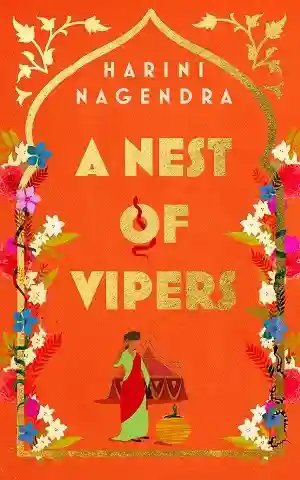
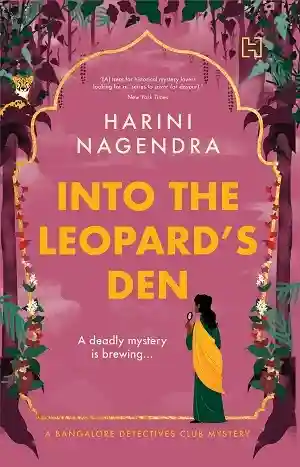

Books are Love!
Get a copy now!