Book Title: The Green Book
Author: Amitava Kumar
Publisher: HarperCollins India
Number of Pages: 254
ISBN: 978-9365692754
Date Published: Dec. 5, 2024
Price: INR 515

Book Excerpt
All That Breathes
Pg. 185 – 189
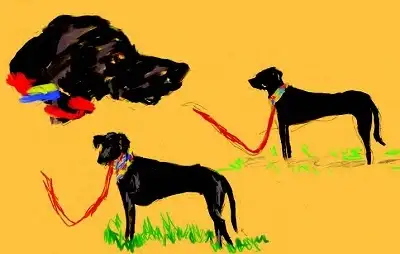
The first creature that we see in the documentary film All That Breathes is a dog. A street dog dimly visible in the crepuscular squalor of urban decay. We are in a corner of Hamdard Chowk in Old Delhi. We see the dog but what we hear is the sound of scurrying, screeching rats. So many rats. After four minutes, the screen turns white, as if catching the light of a passing car, and the name of the film appears. All That Breathes.

Only then does the ostensible subject of the film appear, a kite high in the sky, floating lazily on a current of air. The voice that speaks is that of one of the brothers who form the main cast: the men who save birds that are brought to them in their basement in Delhi. We hear the voice say: ‘When other birds fly, their effort shows. But the kite swims …’ Then, there is a cut and we are watching and listening to the hum of mosquitoes in a puddle where, reflected upside down, we also see other creatures, including humans and goats. This is an important aspect of this remarkable documentary: All That Breathes is ostensibly about birds and the brothers who care for them but what it is really about is an attentiveness to all living beings. When I spoke about this with him over lunch in Delhi, the film’s director Shaunak Sen reached for a phrase made popular by the evolutionary biologist Lyn Margulis who wrote about ‘the intimacy of strangers’. She conducted research that showed that living entities form hybrid or composite life forms in order to produce the conditions for collective flourishing. Sen told me that ‘human exceptionalism is obsolete in every sense of the word’ and ‘entanglement or neighbourliness’ is life’s fundamental fact. In many ways, All That Breathes is an exploration of this belief. Later, in another passage presented as a voice-over, one of the brothers says: ‘You don’t care for things because they share with you the same country, religion, or politics. Life itself is kinship. We are all a community of air. That’s why we can’t abandon the birds. More and more fall from the sky every day …’
Life in a modern urban space is a fight for survival, it is the generosity of strangers, it is jugaad. So much of the care for the hurt birds takes place in a shabby, dimly-lit basement which is also partly a workshop and partly a garage. In one frame, a pillar dissects one half of the basement space where, on the right, a man is sitting at a desk working with a screwdriver in his hand; in the area to the left, the young cousin of the two brothers is examining a kite’s damaged wings. The film is a paean to gritty city life, its horrors—a tender elegy, really—but also to the evolution of new modes of endurance. As the camera lingers over birds sitting or flying above chimneys and between long loops of electric wires and pylons, we hear a voice reporting on how nature has been transformed: ‘As Delhi’s air changed, so did its metabolism. Song-birds sing at a higher pitch, to communicate over traffic noise. Lizards are growing new toes. The kite is a traditional bird. A kite rests, roosts, bathes and attacks in the same style—all its life. Every kite has a code—but code-breaking has become natural today. Every life form adjusts to the city now. Rats, pigs, frogs, mosquitoes, turtles, insects, cows and horses … All improvise and adapt to the city.’ The urban kites are more innovative than rural kites. The brothers report finding cigarette butts in the caged enclosures for the kites. The understanding dawned on them that the birds were using the cigarette butts as parasite repellants. The human is now a part of the natural environment of the city birds. Even evolution, in other words, has recognized the truth of the entanglement that Sen was telling me about.
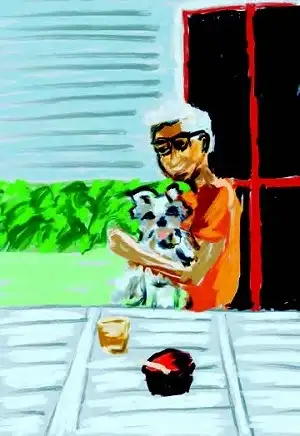
As the film’s viewers we might wonder why the brothers do what they do? A part of the explanation comes again in a voice-over. We are watching a kite floating in the sky near the pale outline of the moon in the daytime sky. Then we witness a man on the top of the steps throwing into the air what must be pieces of meat as the birds wheel and swoop above him. We hear the voice say: ‘It’s said that feeding kites earns “sawab” (religious credit). When they eat the meat you offer, they eat away your difficulties. And their hunger is insatiable …’ But this is only a part of the story. The brothers were body-builders when they were teens; that is how they got an understanding of flesh, muscles and tendon. While running a business making soap dispensers, they started saving kites. The local bird hospital didn’t accept kites because these birds ate meat. (Charity was only for the vegetarian birds!) So the brothers read Muscle Flex and started treating the injured kites. There is a similar this-worldliness in the treatment of the question of the limitations that the brothers face in their work: power cuts, lack of funding, machines that stop working, the incessant heat, more deaths of the birds.
Check out our Latest Book Reviews
‘Man is the loneliest animal,’ the younger brother says in a voice-over as we watch people gathered on rooftops to fly the other kind of kites, the paper ones. He goes on: ‘Trapped by this speciestic difference. It’s like a jail.’ What is the way out of this prison? We find out in the very next sequence. Both brothers, wearing skullcaps, are praying beside a grave in a cemetery in Old Delhi. The grave is their mother’s; she died of cancer. The brothers look up when they hear a bird’s call. One of them says, ‘Spotted owlet.’ In yet another remarkable voice-over we learn that it is their mother who drew them to animals and science by telling stories about ghosts and holy spirits. Their mother’s mantra provides the film’s title: ‘One shouldn’t differentiate between all that breathes.’ A credo for the anthropocene! We are living at a time when 30,000 species per year are being driven to extinction. This means we are making eighty-two species extinct every day.
All That Breathes is attentive to all forms of life—a turtle climbing over a pile of rubbish, a snail crawling near a fire, a lizard on the wall, pigs rooting in a nullah—and it also reminds us that we must also attend to humans. This reminder is a more subtle intervention in the course of the film. As we get deeper into the film, we are told that we cannot divide and differentiate among our fellow humans.
There is a famous psychological experiment conducted by Harvard scientists sometimes called ‘the invisible gorilla’. The participants in the test are asked to watch a screen on which can be seen six people (three in white, and three in black) passing two basketballs around. The given task is to keep a silent count of the number of passes made by the group in white. While this is going on in a tight space, a figure in a gorilla suit walks into the frame, thumps its chest when standing in the middle, and then walks off the other end after spending nine seconds on the screen. The gorilla when thus described seems an obvious thing to notice, but when the study was conducted several years ago, the researchers found that half of the people who watched the video and counted the passes made by the people in white completely missed the gorilla. The experiment is offered as proof of our selective attentiveness.
Excerpted with permission from The Green Book by Amitava Kumar, published by HarperCollins India.
Books are love!
Get a copy now!