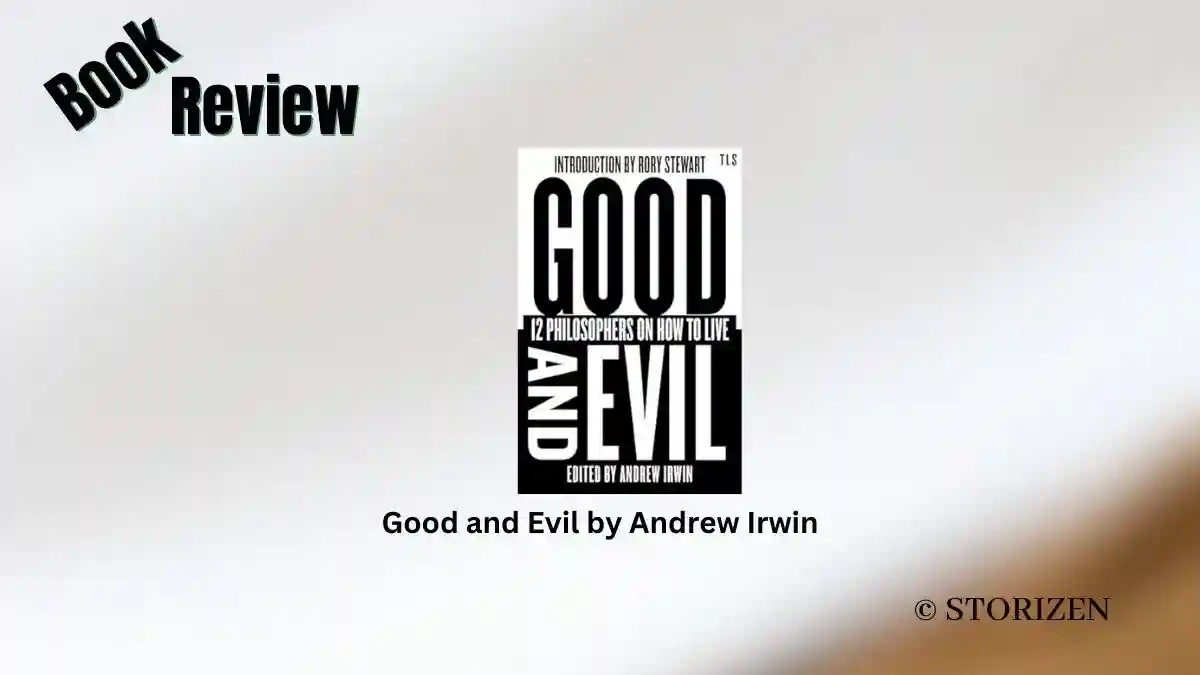
Book Title: Good and Evil: 12 Philosophers on How to Live
Author: Andrew Irwin
Publisher: Tls Books
Number of Pages: 112
ISBN: 0008747199
Date Published: Dec. 5, 2025
Price: INR 349 / $16.99

Book Review
Andrew Irwin’s “Good and Evil: 12 Philosophers on How to Live“, which starts with an introduction by Rory Stewart, is a fantastic collection. What the book does is take those big, timeless questions about how we should behave and break them down into totally manageable essays. Leading experts have written on thinkers ranging from the powerful ideas of Machiavelli all the way to Arendt. The whole book is really trying to get at the core of morality: why humans are so prone to messing things up, and how we can actively choose to be better people. This feels especially important right now, given all the major crises we’re facing that demand clear ethical thinking. Irwin, who is the philosophy editor at the TLS, has put together a huge spectrum of ideas, moving from Mill’s focus on happiness to Nietzsche’s radical idea of loving one’s fate. He deliberately avoids telling what to think, inviting readers instead to wrestle with these often-clashing truths.
Each of these essays really shines a light on a distinct ethical viewpoint. Arendt’s discussion of the “banality of evil” is brilliant in how it dissects the quiet, bureaucratic ways people become complicit in bad things. The piece on Machiavelli cuts through pious illusions to champion a very tough, pragmatic kind of political power. Nietzsche pushes us to accept suffering as part of life’s affirmation, which stands in sharp contrast to Mill’s calculation of what makes people happy. This setup reveals the constant tension in philosophy—the push-pull between aiming for some higher truth and dealing with the actual consequences of your actions. Stewart’s foreword is useful too, grounding these academic concepts in real-world politics and emphasising why leaders need these insights right now.
Check out our Latest Book Reviews
While the book is genuinely stimulating, the brevity does risk a little bit of shallow analysis. The essay on Machiavelli’s tough realism probably needed more room to give it context and push back against the easy caricature of him as just a cynic. Because the book doesn’t provide neat summaries or links between thinkers, readers are left to build their own ethical framework, which might frustrate those looking for simple rules. But that is also what makes the book so great. This Socratic openness forces genuine engagement and personal moral growth, making it exactly the kind of intellectual challenge needed in an age of strongly held, polarised beliefs.
Books are love!
Get a copy now!