Book Title: Great Eastern Hotel
Author: Ruchir Joshi
Publisher: Fourth Estate India
Number of Pages: 920
ISBN: 978-9365695656
Date Published: Feb. 17, 2025
Price: INR 887
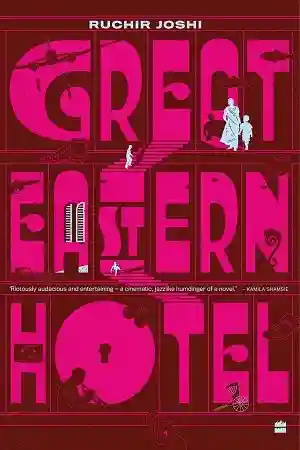
Book Review
Ruchir Joshi’s “Great Eastern Hotel” is a sprawling and ambitious novel set in the vibrant yet tumultuous backdrop of Calcutta during World War II. The story begins in August 1941, on the day of Rabindranath Tagore’s death, which sets the tone for a city caught between moments of grandeur and impending disaster. At the heart of the narrative is the titular Great Eastern Hotel, a luxurious establishment that becomes a microcosm of the era’s social, political, and cultural upheavals. Through its richly detailed setting and a diverse ensemble of characters, Joshi crafts an intricate tapestry that explores themes of love, art, nationalism, and survival amidst chaos.
The novel’s strength lies in its vivid and multifaceted characters. From Nirupama, an idealistic Communist Party volunteer, to Kedar Lahiri, an art-loving scion with dreams of emulating Cézanne, each character is deeply etched into the fabric of the story. Imogen, a young Englishwoman navigating colonial tensions, and Gopal, a street-smart pickpocket thrust into darker dealings, further enrich this mosaic. Their lives intertwine with others at the hotel—an American jazz musician, a French chef, and military officers running covert operations—creating a dynamic interplay between personal ambitions and historical forces.
What sets “Great Eastern Hotel” apart is its duality: it is both expansive in scope and precise in its execution. Ruchir Joshi’s writing is cinematic and jazz-like, capturing both the grandeur of Calcutta as a city and the intimate struggles of its inhabitants. The narrative twists and turns like the Hooghly River, offering a panoramic view of a metropolis on the brink of transformation. The framing device of a first-person narrator cataloging these events decades later adds another layer of depth, connecting past and present while raising questions about memory and historical legacy.
Check out our Latest Book Reviews
At over 900 pages, this “megashow” demands patience from its readers but rewards them with an immersive experience. It is not just a historical novel but also a commentary on contemporary issues like political commitment and cultural identity. Joshi’s ability to balance individual stories with larger historical currents makes “Great Eastern Hotel” a masterful work that resonates far beyond its setting. For those willing to invest in its complexity, it offers an unforgettable journey through one of India’s most pivotal eras.
Books are love!
Get a copy Now!