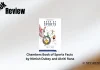
Book Title: Merlin’s Tour of the Universe, Revised and Updated for the Twenty-First Century: A Traveler’s Guide to Blue Moons and Black Holes, Mars, Stars, and Everything Far
Author: Neil deGrasse Tyson
Publisher: Black & White Publishing
Number of Pages: 304
ISBN: 978-1785307973
Date Published: Oct. 29, 2024
Price: INR 411
Book Review
Neil deGrasse Tyson’s “Merlin’s Tour of the Universe, Revised and Updated for the Twenty-First Century: A Traveler’s Guide to Blue Moons and Black Holes, Mars, Stars, and Everything Far” is not your typical science book—it’s a lively conversation between the cosmos-curious and a fictional extraterrestrial, Merlin, from the Andromeda Galaxy. Merlin, a self-proclaimed observer of Earth’s scientific milestones and close confidant of figures like Newton and Einstein, tackles burning questions about astrophysics with humor, wisdom, and the occasional rhyme. With playful cartoons sprinkled throughout, the book demystifies phenomena like gravity, light, and distant galaxies, making the universe accessible to both the scientifically inclined and the merely curious.
First published in 1989, this updated version of “Merlin’s Tour of the Universe” brings fresh insights, including Pluto’s demotion to a dwarf planet and the record-breaking speed of a probe launched in 2023. Tyson’s approach, through Merlin, is like having a charming extraterrestrial tutor who makes astrophysics feel like a dinner-table chat rather than a lecture. Perfect for readers with short attention spans or multitaskers, it bombards you with bite-sized facts, ensuring you’ll retain at least 40% of the cosmic trivia—and have a handy physical copy to revisit the rest later.
Merlin answers questions that range from the pragmatic to the whimsical: Why do stars twinkle but planets don’t? What would happen if Earth stopped spinning? And just how long would we have to panic if the sun vanished? (Spoiler: 500 seconds.) Delivered in plain language that even a 5-year-old can grasp, the book includes clever explanations like a light year being “not a year with fewer calories.” It’s the perfect blend of humor and scientific rigor, making it equally enjoyable for space novices and enthusiasts.
Far from being a dry introduction to astronomy, “Merlin’s Tour of the Universe” feels more like a cosmic buffet of fun facts and intriguing tidbits. It’s guided entirely by questions from real readers, spanning ages 4 to 90, and is designed to ignite curiosity rather than overwhelm with detail. Whether you consume it as a light audiobook (complete with diverse narrators) or savor the printed version’s illustrations and appendix, it’s a delightful way to dip your toes into the mysteries of the universe.
Check out our Latest Book Reviews
For anyone with a love for the stars—or just a penchant for quirky Q&A formats—”Merlin’s Tour of the Universe” is a must-read. Tyson’s ability to weave entertainment with education is unparalleled, and Merlin’s cheeky extraterrestrial perspective adds a layer of charm to every page. Whether you’re a seasoned space enthusiast or a beginner, this book is an invitation to explore the cosmos with curiosity, humour, and a touch of magic.
Books are love!
Get a copy now!