Book Title: Progress: A History of Humanity’s Worst Idea
Author: Samuel Miller McDonald
Publisher: William Collins
Number of Pages: 432
ISBN: 978-0008800987
Date Published: Aug. 20, 2025
Price: INR 419
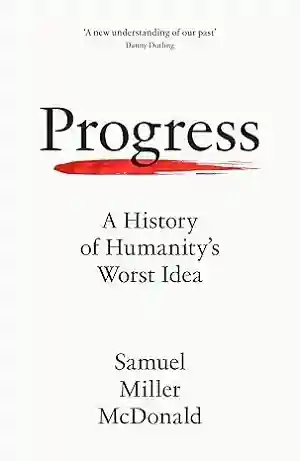
Book Review
“Progress” by Samuel Miller McDonald is a provocative and deeply critical examination of the idea of progress that has shaped human civilization. McDonald, a geographer by training, challenges the common narrative that progress inherently means improvement, pointing out that this concept is often used as an ideological cover for environmental degradation and exploitation. Tracing the origins of progress back to early civilizations like Mesopotamia, he argues that what we call progress has been intimately tied to empires and extractive, parasitic relationships with the environment and other societies. The book combines historical insight with an ecological perspective to question whether growth and technological advancement have truly benefited humanity or just imposed greater harm on the planet.
The author’s critique extends to modern capitalism and the faith in perpetual economic growth. McDonald suggests that growth preceded capitalism, not the other way around, and that the relentless pursuit of growth has often justified devastating environmental and social consequences. His framing of “energy capture” as a fundamental process in civilizations highlights how societies have historically extracted resources at others’ expense. McDonald’s argument is sharp and unyielding, with a strong emphasis on the destructive impact of what he terms “parasitic” cultures that thrive on exploitation. He challenges readers to reconsider the myths surrounding progress and to urgently seek alternative outlooks that prioritize sustainability.
Check out our Latest Book Reviews
However, the book’s style has been criticized for verbosity, heavy academic language, and a rather bleak outlook, with some reviewers finding it overwhelming or overly negative. McDonald’s perspective is uncompromising as he dismantles many cherished views on progress, civilizational achievements, and even religion. Yet, for readers interested in a profound rethinking of one of humanity’s most foundational ideas, “Progress” offers a compelling and necessary confrontation with the costs embedded in the narrative of civilization’s advancement. Its call for a shift in how society views progress is both timely and urgent in the context of ongoing ecological crises.
Books are love!
Get a copy now!