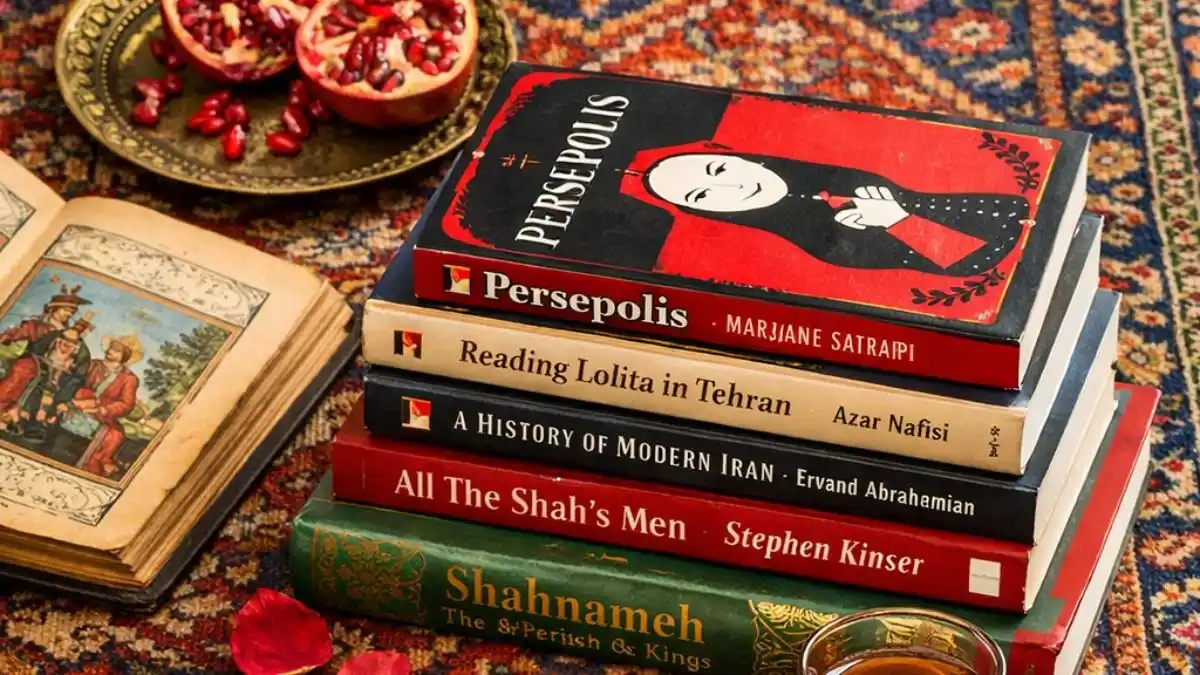
Iran is a country with a rich and complex story—one shaped by ancient empires, poetic traditions, political upheavals, and powerful cultural movements. Yet much of what the world hears about Iran today is often limited to headlines about geopolitics, nuclear negotiations, or regional conflicts. To truly understand the nation, it’s essential to explore the voices, histories, and stories that reveal its deeper cultural and historical layers. From timeless Persian epics and modern literary classics to memoirs and historical analyses, books offer one of the most meaningful ways to understand Iran beyond the news.
In this thoughtfully curated by Storizen list of 10 Best Books About Iran to Understand Its History, Culture, and Revolution, we bring together works that illuminate different dimensions of the country. These titles explore Iran’s ancient civilization, the political transformations of the twentieth century, the dramatic events surrounding the Islamic Revolution, and the everyday experiences of people living through these changes. Together, they offer readers a powerful and nuanced portrait of a nation whose history, culture, and resilience continue to shape the modern world.
- 1. Persepolis — Marjane Satrapi
- 2. Reading Lolita in Tehran — Azar Nafisi
- 3. A History of Modern Iran — Ervand Abrahamian
- 4. All the Shah’s Men — Stephen Kinzer
- 5. The Persians: Ancient, Medieval and Modern Iran — Homa Katouzian
- 6. Iran Awakening — Shirin Ebadi
- 7. The Blind Owl — Sadegh Hedayat
- 8. My Uncle Napoleon — Iraj Pezeshkzad
- 9. Shahnameh: The Persian Book of Kings — Abolqasem Ferdowsi
- 10. King of Kings: The Iranian Revolution — Scott Anderson
1. Persepolis — Marjane Satrapi
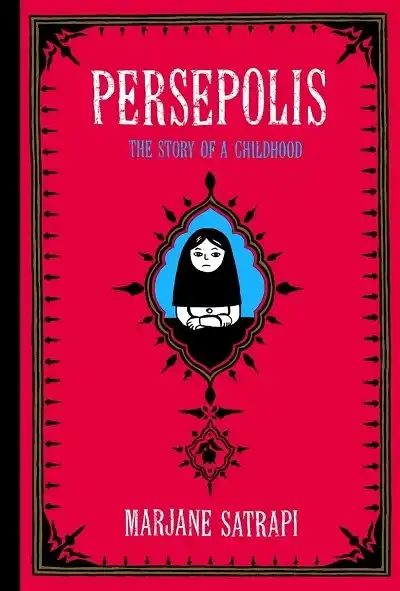
Persepolis by Marjane Satrapi is a bestselling graphic memoir that offers a deeply personal account of growing up in Iran during the Islamic Revolution. Told through striking black-and-white illustrations, the story follows Satrapi’s childhood in Tehran from the age of six to fourteen—a time marked by the fall of the Shah, the rise of the Islamic Republic, and the turmoil of the Iran-Iraq war. Through the eyes of a curious and outspoken young girl, readers witness how large political events shape everyday life, family relationships, and personal identity.
Born to politically aware parents and descended from one of Iran’s last imperial families, Marjane grows up surrounded by strong opinions, revolutionary ideals, and stories of resistance. Her experiences reveal the stark contrast between life at home—filled with warmth, humor, and intellectual debate—and the strict realities imposed by the new regime in public spaces. Through her childlike curiosity and honesty, Satrapi explores complex themes such as freedom, repression, faith, and cultural identity.
Both intensely personal and deeply political, Persepolis is more than a memoir—it is a powerful coming-of-age story set against the backdrop of a nation in transformation. With moments that are wise, funny, and heartbreaking, the book captures the resilience of the human spirit and reminds readers of the profound impact that war, ideology, and political change can have on ordinary lives.
2. Reading Lolita in Tehran — Azar Nafisi
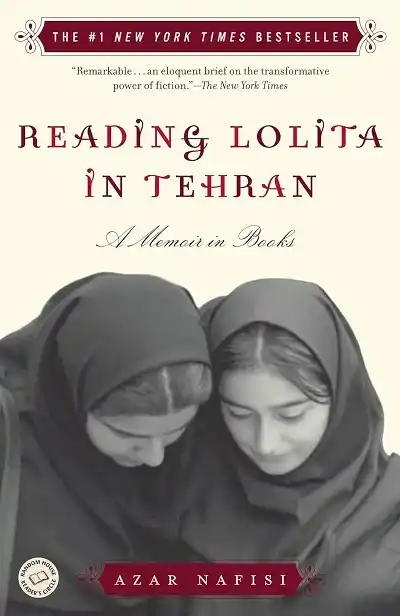
Reading Lolita in Tehran by Azar Nafisi is a powerful and deeply moving memoir that explores the transformative power of literature in the face of oppression. Set in post-revolutionary Iran, the book recounts Nafisi’s experience as a university professor who secretly gathered a small group of female students in her home every Thursday morning to read and discuss banned Western literary classics. Over two years, these private meetings became a safe space where the women could speak openly, remove their veils, and reflect on both the novels they were reading and the realities of their own lives under a restrictive regime.
Through discussions of works by authors such as Jane Austen, F. Scott Fitzgerald, Henry James, and Vladimir Nabokov, the students begin to explore themes of freedom, identity, and personal choice. Their conversations reveal how literature can mirror life, offering both comfort and courage in a society where intellectual expression and women’s voices were increasingly suppressed. As morality squads patrol the streets and universities fall under strict ideological control, Nafisi’s living room becomes a quiet sanctuary for imagination, debate, and self-discovery.
Both intimate and politically resonant, Reading Lolita in Tehran offers a rare glimpse into the everyday struggles and resilience of women living in revolutionary Iran. Blending memoir, literary criticism, and cultural reflection, the book stands as a testament to the enduring power of stories—and how reading can become an act of resistance, hope, and liberation.
3. A History of Modern Iran — Ervand Abrahamian
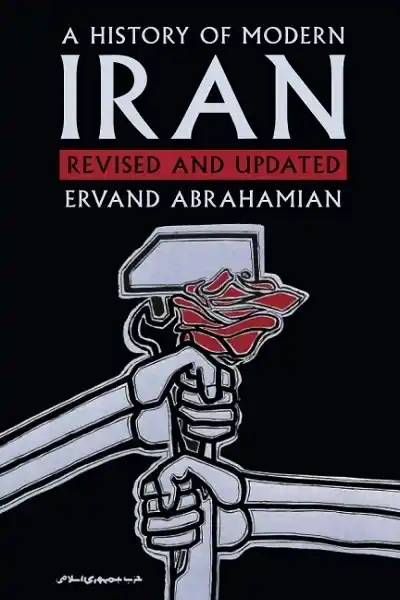
In A History of Modern Iran, historian Ervand Abrahamian offers a compelling and insightful exploration of Iran’s complex journey from the mid-nineteenth century to the present. The book traces the country’s transformation through pivotal events such as the discovery of oil, foreign imperial interventions, the rise and fall of the Pahlavi monarchy, and the establishment of the Islamic Republic. By examining political shifts, economic developments, and social movements, Abrahamian provides readers with a deeper understanding of the forces that have shaped modern Iranian society.
This updated edition expands the narrative to include more recent developments, including the Green Movement protests of 2009, the later years of Mahmoud Ahmadinejad’s presidency, the election of Hassan Rouhani, and the negotiations surrounding the Iran nuclear deal. Through clear analysis and historical context, Abrahamian connects these contemporary events to the country’s longer political and social history.
At the heart of the book is the story of the Iranian people themselves—communities that have navigated decades of upheaval, reform, revolution, and resilience. Combining scholarly research with accessible storytelling, A History of Modern Iran offers a thoughtful and comprehensive account of a nation that continues to shape—and be shaped by—global political dynamics.
4. All the Shah’s Men — Stephen Kinzer
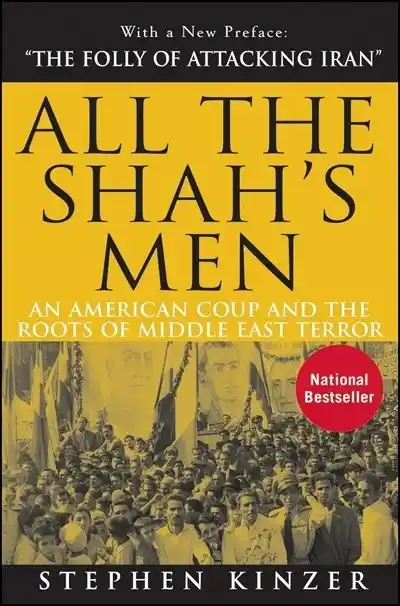
All the Shah’s Men by Stephen Kinzer is a gripping work of history that uncovers the dramatic story behind the 1953 CIA-backed coup in Iran. Widely praised by major publications and recognized as one of the best books of the year by outlets such as The Washington Post and The Economist, the book revisits the moment when Iran’s democratically elected prime minister, Mohammad Mossadegh, was overthrown through a covert operation orchestrated by the United States and Britain. Kinzer brings this complex political episode to life through detailed storytelling, revealing the secret maneuvers, political tensions, and international interests that led to one of the most consequential events in modern Middle Eastern history.
The coup ultimately restored the Shah to power and ushered in decades of authoritarian rule, shaping Iran’s political trajectory and fueling widespread resentment toward foreign intervention. Kinzer also explores how the long-term consequences of this event contributed to rising anti-American sentiment and the eventual emergence of revolutionary movements within the country.
Both compelling and thought-provoking, All the Shah’s Men offers important historical context for understanding Iran’s relationship with the West and the broader dynamics of Middle Eastern politics. Through its careful research and vivid narrative, the book highlights how a single covert operation had lasting effects that continue to influence global politics today.
5. The Persians: Ancient, Medieval and Modern Iran — Homa Katouzian

In The Persians: Ancient, Mediaeval and Modern Iran, scholar Homa Katouzian presents a sweeping and insightful history of Iran, tracing the story of the region from the days of the ancient Persian Empire to the complexities of the modern Iranian state. While contemporary discussions about Iran often focus on political tensions, nuclear debates, or regional conflicts, Katouzian takes a broader approach—exploring the country’s long and rich history through its politics, culture, and society.
Writing from a distinctly Iranian perspective, Katouzian weaves together historical events with the cultural and literary traditions that have shaped the nation’s identity. The book highlights the influence of Persian literature and philosophy, discussing the works of legendary poets such as Rumi, Omar Khayyam, and Saadi, whose writings continue to resonate across centuries. By integrating cultural achievements with political developments, the book offers a fuller understanding of Iran’s intellectual and artistic heritage.
Katouzian also examines the historical patterns of governance in Iran, arguing that the long tradition of concentrated and often arbitrary political power contributed to cycles of instability and social tension. Through thoughtful analysis and extensive historical context, The Persians provides readers with a comprehensive perspective on Iran’s past and a deeper understanding of its role in shaping the contemporary world.
Also Read: 10 Books That Feel Like Therapy
6. Iran Awakening — Shirin Ebadi
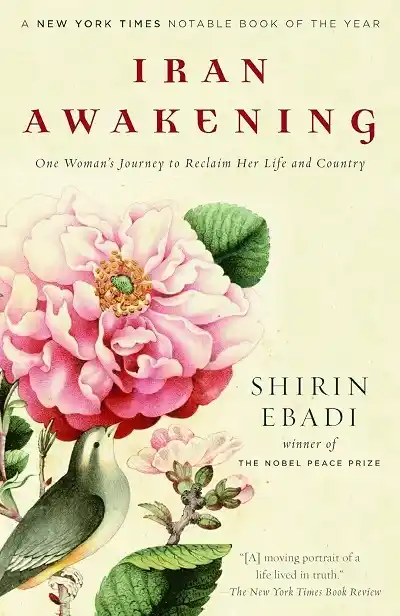
Iran Awakening by Shirin Ebadi, winner of the 2003 Nobel Peace Prize, is a powerful and deeply personal memoir that traces the life of one of the world’s most courageous human rights advocates. In this inspiring account, Ebadi reflects on her journey from childhood in a progressive and supportive family to becoming Iran’s first female judge—a remarkable achievement in a society undergoing dramatic political change. However, after the Islamic Revolution of 1979, when religious authorities declared that women could no longer serve as judges, she was removed from her position and forced to work as a clerk in the very courtroom she once presided over.
Refusing to accept this injustice, Ebadi rebuilt her career as a human rights lawyer, dedicating her life to defending women, children, and political prisoners in cases that many others feared to take on. Through her work, she became a fearless advocate for justice, speaking out against discrimination and exposing abuses within the legal system. Her story also offers insight into her personal life as a wife and mother balancing family responsibilities while confronting immense professional and political challenges.
Both moving and thought-provoking, Iran Awakening provides a rare and intimate perspective on the struggles for human rights and democracy in modern Iran. Ebadi’s memoir not only tells the story of one remarkable woman’s resilience but also sheds light on the broader social and political upheavals that have shaped contemporary Iranian society.
7. The Blind Owl — Sadegh Hedayat
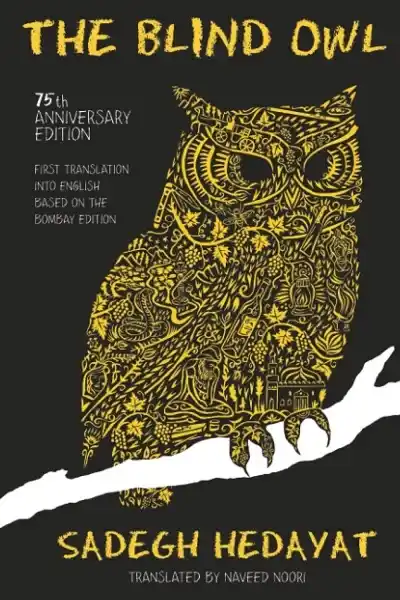
The Blind Owl by Sadegh Hedayat is widely regarded as one of the most important works of modern Persian literature and a masterpiece of Iranian fiction. At first glance, the novel appears to tell a haunting story of doomed love, but as the narrative unfolds, reality becomes blurred and the boundaries between memory, imagination, and madness begin to dissolve. Through its dark, dreamlike atmosphere and deeply introspective voice, the book explores themes of loneliness, despair, obsession, and the fragile nature of human perception.
Often compared to the works of writers such as Franz Kafka, Rainer Maria Rilke, and Edgar Allan Poe, The Blind Owl stands apart with its unique style and psychological depth. Hedayat’s haunting storytelling draws readers into the troubled mind of the narrator, creating a mysterious and unsettling literary experience that challenges conventional storytelling and defies easy interpretation.
This anniversary edition, translated by award-winning writer Naveed Noori, offers a fresh and carefully researched English translation based on the definitive Bombay edition of Hedayat’s handwritten manuscript. Endorsed by the Sadegh Hedayat Foundation, the edition includes detailed analysis and extensive notes that help readers better understand the cultural references, language, and symbolism within the novel. Through its faithful preservation of Hedayat’s voice and structure, this translation brings new depth and clarity to a work that continues to captivate readers and scholars around the world.
Also Read: 10 Books Like Atomic Habits That Will Transform Your Daily Routine
8. My Uncle Napoleon — Iraj Pezeshkzad
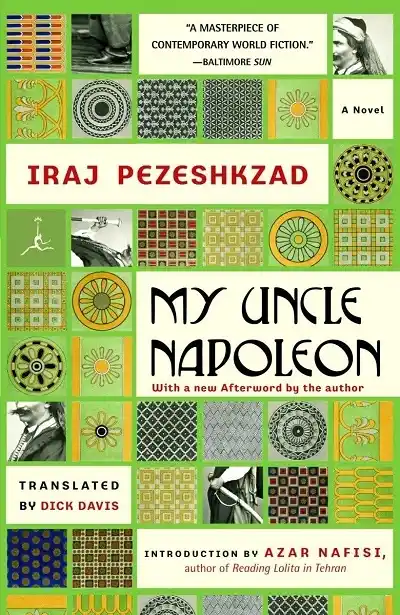
My Uncle Napoleon by Iraj Pezeshkzad is widely considered one of the most beloved Iranian novels of the twentieth century. Set within the lively atmosphere of a large extended family in Tehran, the story is narrated by a young man whose life becomes increasingly complicated after he falls in love with Layli, the daughter of the family’s dominating and eccentric patriarch—known as Dear Uncle Napoleon. What follows is a humorous and chaotic tale filled with misunderstandings, rivalries, and elaborate family schemes.
At the center of the novel is Uncle Napoleon himself, a blustering and suspicious figure who constantly imagines conspiracies against him, often blaming the British for nearly everything that goes wrong. Through this exaggerated yet unforgettable character, Pezeshkzad cleverly satirizes social attitudes, political paranoia, and family dynamics in Iranian society. The narrator’s innocent romance with Layli only adds to the growing tension, sparking dramatic feuds and comic situations among relatives.
First published in Iran in the 1970s, the novel quickly became a cultural phenomenon and was later adapted into an immensely popular television series. With its sharp humor, memorable characters, and affectionate portrayal of family life, My Uncle Napoleon remains a timeless satire of young love, tradition, and the absurdities that often unfold within close-knit families.
9. Shahnameh: The Persian Book of Kings — Abolqasem Ferdowsi
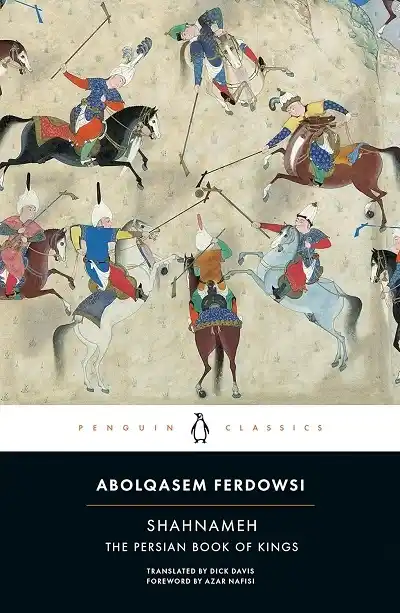
Shahnameh: The Persian Book of Kings by Ferdowsi is one of the greatest epics in world literature and a cornerstone of Persian cultural heritage. Originally composed in the tenth century for the Samanid princes of Khorasan, this monumental work tells the sweeping story of ancient Persia—from the mythical creation of the world and the rise of legendary kings to the Arab conquest in the seventh century. Through heroic battles, tragic destinies, and legendary figures such as Rostam, the Shahnameh preserves the myths, history, and identity of pre-Islamic Persia in a rich tapestry of storytelling.
This Penguin Classics edition features the celebrated translation by Dick Davis, widely regarded as one of the leading translators of Persian literature. Davis combines elegant prose with lyrical verse, allowing modern readers to experience the beauty and power of Ferdowsi’s poetry while providing clear explanations that make the epic accessible to contemporary audiences. The revised and expanded version also includes more than one hundred pages of newly translated material, making it the most comprehensive English-language edition of the work.
For centuries, the stories of the Shahnameh have shaped Persian culture, influencing art, poetry, and literature across generations. References to its legends can be found in the works of poets such as Rumi and Hafez, and even in modern novels like The Kite Runner. With its timeless themes of heroism, fate, loyalty, and power, the Shahnameh remains an enduring masterpiece that continues to connect readers with the rich history and imagination of Persian civilization.
10. King of Kings: The Iranian Revolution — Scott Anderson

King of Kings by Scott Anderson is a gripping historical account of the dramatic events that led to the Iranian Revolution of 1979, a moment that reshaped not only Iran but also global politics. The book begins with a striking contrast: in 1977, during a state visit to Iran, U.S. President Jimmy Carter praised Shah Mohammad Reza Pahlavi’s rule and described Iran as an “island of stability.” With vast oil wealth, a powerful military, and the feared secret police force SAVAK suppressing dissent, the Shah’s regime appeared secure and closely aligned with the United States during the Cold War.
Yet within just fourteen months, that seemingly stable order collapsed. Facing growing public unrest and a powerful religious movement led by Ayatollah Ruhollah Khomeini, the Shah was forced into exile as a revolutionary uprising swept through the country. The revolution not only ended decades of monarchy but also triggered the hostage crisis that deeply strained relations between Iran and the United States.
Through vivid storytelling and sharp political analysis, Anderson explores how both the Shah and Western governments failed to recognize the depth of dissatisfaction among ordinary Iranians. By placing the Iranian Revolution in a broader historical context, King of Kings highlights how social inequality, religious fervor, and political repression can ignite transformative upheaval. The result is a compelling narrative that sheds light on one of the most consequential revolutions of the modern era and its lasting impact on global affairs.
Understanding Iran requires more than a single narrative—it requires exploring its many voices, histories, and cultural expressions. The books featured in this list of 10 Best Books About Iran to Understand Its History, Culture, and Revolution, Curated by Storizen, provide a wide-ranging perspective on the country’s past and present. From personal memoirs and political histories to literary masterpieces that capture the spirit of Persian storytelling, each title offers a unique window into Iranian society.
Together, these works reveal the depth of Iran’s intellectual heritage, the resilience of its people, and the historical forces that have shaped its modern identity. Whether you are interested in global history, Middle Eastern politics, Persian literature, or powerful personal narratives, these books serve as an excellent starting point for anyone looking to better understand one of the world’s most fascinating and influential civilizations.
Books are love!
Get your copy now!