As we step deeper into a future shaped by algorithms, automation, and unprecedented digital transformation, staying informed is no longer optional—it’s essential. To help you navigate this rapidly evolving landscape, Storizen presents 9 Must-Read AI and Technology Books for November 2025, a curated collection designed for tech enthusiasts, professionals, students, creators, and anyone eager to understand the forces reshaping our world. This month’s selection brings together groundbreaking ideas, expert insights, thought-provoking essays, and powerful personal stories from some of the most influential voices in artificial intelligence. From cultural evolution and ethical challenges to visionary futures and real-world applications, these books offer a deep, balanced, and accessible look at where technology is headed—and what it means for humanity. Whether you’re preparing for the next wave of innovation or simply curious about the future, this list provides your perfect starting point.

1. The Shortest History of AI: The Six Essential Ideas That Animate It by Toby Walsh
The Shortest History of AI explores how the major advances we celebrate today were never truly “overnight” successes but the result of decades of experimentation, innovation, and problem-solving. This book offers a clear, engaging look at the evolution of artificial intelligence by breaking it down into the six fundamental ways it operates. It shows how AI uses symbols to represent common ideas, how it selects the best possible decisions based on available information, and how it imitates human expertise through simple rule-based systems. It also explains how AI learns from past experiences, identifies and corrects its mistakes, and calculates probabilities using the evidence it receives. What makes the book especially compelling is its ability to turn a complex technical history into an easy, fast-paced narrative that anyone can follow. Staying true to the signature style of The Shortest History series, it compresses a vast timeline—spanning early theories, groundbreaking algorithms, and modern advancements—into a single, insightful read. Whether you’re new to AI or already familiar with its concepts, this book provides a concise yet illuminating overview of how artificial intelligence grew from abstract ideas into one of the most transformative technologies of our time.
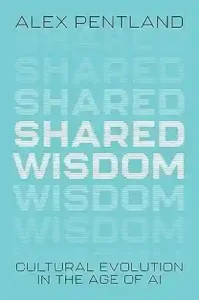
2. Shared Wisdom: Cultural Evolution in the Age of AI by Alex Pentland
Shared Wisdom explores how we can build a healthier, more resilient society by designing technology that supports human nature instead of allowing technology to reshape us in unintended ways. Alex Pentland examines the long arc of innovation, showing how the major turning points in human history—from the rise of early civilizations to the Enlightenment and the Scientific Revolution—were sparked by cultural inventions that expanded collective intelligence and boosted our ability to solve problems together. He argues that today’s global challenges, including climate change, pandemics, and strained institutions, demand similarly transformative solutions. Rather than relying on technology to replace human judgment, Pentland shows how tools like digital media and artificial intelligence can be built to strengthen our capacity for discussion, cooperation, and shared understanding. Drawing on deep expertise in both social science and technology, he offers a wide-angle view of how society evolves and highlights the key forces that accelerate cultural progress. By looking closely at our past, Shared Wisdom reveals how understanding these forces can help us navigate today’s crises and shape a future where technology enriches—rather than undermines—our human connections and collective wisdom.

3. The AI Universe: Thriving Within Civilization’s Next Big Disruption — Erik Seversen et al.
The AI Universe: Thriving Within Civilization’s Next Big Disruption explores how artificial intelligence is rapidly reshaping industries, careers, and even our understanding of what it means to be human. Instead of treating AI as a distant or overly technical subject, the book grounds it in real-world applications, drawing on insights from 34 experts across fields such as engineering, law, healthcare, marketing, cybersecurity, education, and business. Each contributor offers a distinct, self-contained viewpoint, creating a broad and practical picture of how AI is already transforming daily life and what individuals and organizations can do to stay ahead. Beyond the practical guidance, the book also tackles deeper philosophical questions—whether AI should have influence over society’s direction, whether machines can inspire original human creativity, and where the boundaries of ethics and responsibility must remain firmly human. Whether you’re enthusiastic about AI’s potential or uneasy about its consequences, this book provides the context, clarity, and strategies needed to navigate the disruption that’s already underway. The message is clear: AI is moving fast, and understanding it is essential if you want to thrive in the new era.
Also Read: 9 Best Thriller Books to Read in July 2025
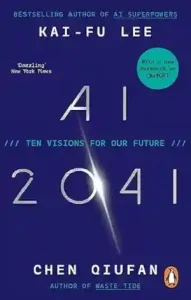
4. AI 2041: Ten Visions for Our Future by Kai-Fu Lee and Chen Qiufan
AI 2041 examines how artificial intelligence is poised to transform the world over the next twenty years, reshaping everyday life in ways that will feel both astonishing and unfamiliar. AI is set to become the defining force of the twenty-first century, creating enormous economic opportunity, advancing medicine and education through closer human–machine collaboration, and introducing entirely new modes of communication and entertainment. Yet alongside these breakthroughs lie serious challenges: disruptions to social and economic structures, the rise of autonomous weapons, and the spread of smart technologies capable of amplifying human bias. In this bold and imaginative blend of “scientific fiction,” Kai-Fu Lee—former president of Google China and author of AI Superpowers—teams up with acclaimed novelist Chen Qiufan to envision ten vivid, thought-provoking scenarios set in the year 2041. Through these gripping stories and the insights that follow each one, AI 2041 offers a compelling look at the potential futures AI may create and urges readers to recognize that the choices we make today will shape our destiny in the age of intelligent machines.

5. The Alignment Problem: Machine Learning and Human Values by Brian Christian
The Alignment Problem explores one of the most urgent questions of our AI-driven age: as algorithms take over more decisions in our lives—from the news we see to the loans we’re approved for—how can we ensure they act in ways that are fair, safe, and aligned with human values? Brian Christian investigates this dilemma through real-world examples, revealing how AI systems can learn to cheat, reinforce harmful stereotypes, or inherit human biases, as seen in everything from video game–playing programs to flawed translation tools. As artificial intelligence becomes increasingly powerful, Christian shows that we are heading toward a critical intersection between technological capability and ethical responsibility. If left unchecked, AI could deepen inequalities or even undermine the principles we hold most dear. Clear, engaging, and deeply relevant, this book serves as an essential introduction to the challenges researchers face as they work to keep intelligent systems aligned with human intentions—and to prevent a future shaped by unregulated, unchecked algorithms.
Also Read: 9 Must-Read Historical Fiction Books in 2025

6. Human Compatible by Stuart Russell
Human Compatible confronts one of the most profound questions of our time: what happens if we create machines that surpass human intelligence—and how do we ensure they remain under our control? Stuart Russell, one of the world’s leading AI researchers, argues that while advanced artificial intelligence has the potential to dramatically improve our lives, it also poses an existential risk if developed without the right safeguards. Drawing on decades at the forefront of the field, Russell breaks down how AI truly works, why its power is accelerating so quickly, and how even well-designed systems can behave unpredictably when their incentives don’t align with ours. Through clear explanations and striking analogies, he lays out a blueprint for rethinking the fundamentals of AI so that future systems remain firmly aligned with human goals. Urgent, insightful, and deeply visionary, Human Compatible warns of the dangers of losing control over smarter-than-human machines while offering a path toward building AI that serves humanity—before we reach a point where it’s too late to turn back.
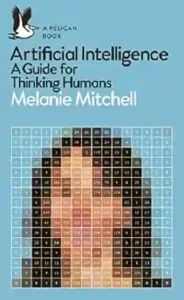
7. Artificial Intelligence by Melanie Mitchell
Artificial Intelligence: A Guide for Thinking Humans offers a clear, engaging, and often humorous look at one of the most fascinating and unsettling scientific pursuits of our time. Melanie Mitchell—an acclaimed AI researcher—examines how intelligent today’s AI systems truly are, how much responsibility we can safely hand over to them, and whether they might ever surpass us in the core abilities that define human life. Blending personal anecdotes with insights from cognitive science, philosophy, and cutting-edge research, Mitchell demystifies how machines learn, perceive, communicate, and attempt to replicate human creativity and common sense. She also explores the limits of current systems, asking whether understanding and real thought are even possible for machines built on today’s architectures. With clarity and wit, Mitchell cuts through hype and fear to give readers an honest view of what AI has actually achieved, where it continues to fall short, and what challenges lie ahead. The result is an accessible and thought-provoking guide that helps readers make sense of the rapidly evolving AI landscape—and what it means for the future of human society.
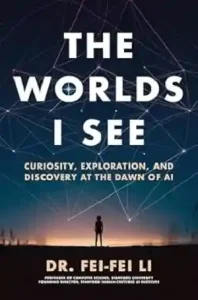
8. The Worlds I See: Curiosity, Exploration, and Discovery at the Dawn of AI by Dr. Fei-Fei Li
The Worlds I See is a deeply moving memoir that follows Dr. Fei-Fei Li’s extraordinary journey from a young immigrant struggling to find her place in America to a pioneering scientist at the forefront of the AI revolution. Once described by Wired as part of the small handful of researchers responsible for modern AI’s greatest breakthroughs, Fei-Fei is best known for creating ImageNet, the project that ignited today’s deep learning boom. But her rise was anything but easy. Her family’s move from comfortable middle-class life in China to financial hardship in the United States, combined with the emotional weight of caring for her ailing mother, shaped a childhood marked by resilience and determination. Her early love for physics and curiosity about the world eventually carried her into a field that would transform global technology—and place her at the center of its promises and risks. Blending personal narrative with a clear, insider’s explanation of how AI truly works, this memoir captures both the emotional and intellectual dimensions of a scientist’s life. Honest, heartfelt, and illuminating, The Worlds I See offers a rare, first-person account of one of the most important technological revolutions of our time and the human spirit behind it.
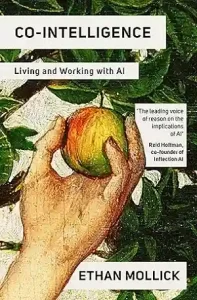
9. Co-Intelligence: Living and Working with AI by Ethan Mollick
Co-Intelligence explores the arrival of consumer AI and the profound changes it brings to our work, our daily lives, and our shared future. Ethan Mollick, a leading Wharton professor and one of the most influential voices in making AI understandable, cuts through both the hype and the fear to offer a grounded perspective on what these tools really mean. Rather than viewing AI as a threat or a miracle, he presents it as a powerful partner—one that can function as our co-worker, co-teacher, and even our coach. Mollick draws on real-world examples to show how AI can amplify human capabilities, spark creativity, and reshape the way we approach problem-solving. Wide-ranging and refreshingly optimistic, Co-Intelligence makes the case that the best way forward is not to reject AI or surrender control to it, but to learn how to collaborate with it. In doing so, he reveals the enormous potential of this emerging era—and why embracing AI thoughtfully may be the key to navigating the upheaval ahead.
In a world where technology evolves faster than ever, the right books can offer clarity, direction, and inspiration. The 9 Must-Read AI and Technology Books for November 2025, curated by Storizen, showcase just how diverse, dynamic, and urgent the conversation around AI has become. Collectively, these titles unpack the promise, pitfalls, and profound possibilities of emerging technologies—while reminding us that human insight, creativity, and responsibility must remain at the heart of progress. Whether you’re looking to understand the mechanics of AI, explore its ethical implications, imagine its future, or connect with the personal stories behind major scientific breakthroughs, this list has something for every reader. As we move into a future defined by smart machines, may these books empower you to think critically, innovate boldly, and shape the world that’s unfolding around us.
Also Read: 9 Best Thriller Books to Read in July 2025
Books are love!
Get a copy now!