September 20, 2026: In what has officially become the most talked-about literary release of 2026, Caro Claire Burke’s debut novel Yesteryear (Alfred A. Knopf / 4th Estate) continues to dominate bestseller lists and viral BookTok discourse.
Drawing heavy inspiration from the viral “tradwife” subculture—where social media influencers film themselves baking sourdough, churning butter, and extolling traditional submissive femininity in vintage dresses—the novel exposes the psychological fractures behind hyper-curated online domesticity.
With an Anne Hathaway-led film adaptation officially greenlit by Amazon MGM Studios, Yesteryear has transformed from a breakout spring satire into a full-scale cultural lightning rod.
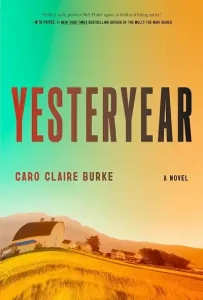
Book & Publishing Details
| Property | Details |
| Book Title | Yesteryear |
| Author | Caro Claire Burke |
| Publisher | Alfred A. Knopf / 4th Estate |
| Bestseller Status | #1 New York Times Bestseller |
| Film Rights | Acquired by Amazon MGM Studios (Starring Anne Hathaway) |
| Primary Themes | Tradwife influencers, performative faith, online parasociality, satire |
The Plot: Satire, Psychosis, and the Fantasy of the Past
The story centers on Natalie Heller Mills, an ambitious, Harvard-educated woman who transforms into the ultimate “tradwife” influencer. To her millions of followers, Natalie lives an idyll of Christian homesteading: raising six children on a pristine farm, grinding her own grain, and preaching submission to her cowboy husband.
Behind the camera, however, her “simple life” is built on hidden wealth, hired farmhands, and relentless self-delusion.
THE TWO FACES OF NATALIE HELLER
| PUBLIC ONLINE PERSONA | PRIVATE REALITY |
| Perfect Christian Tradwife | Financed by hidden family wealth |
| Churning butter & raising 6 kids | Managed by hired help & nannies |
| Preaching submission & homesteading | Crushing strain & mental breakdown |
| Millions of adoring followers | Complete isolation from modern life |
The narrative shifts when Natalie wakes up believing she has been miraculously transported back to the year 1855. As she struggles to survive without modern technology, the book reveals a chilling psychological twist: Natalie hasn’t time-traveled at all.
Following a public scandal that shattered her online image, she and her husband retreated into total isolation, cutting off electricity and forcing their family to live in extreme 19th-century conditions—a desperate attempt to make her online fantasy real.
Why ‘Yesteryear’ is Dividing Readers on BookTok
Burke, a former host of the podcast Diabolical Lies who went viral on TikTok analyzing media literacy and gender roles, wrote Yesteryear to critique how capitalism and patriarchal structures sell impossible standards to women.
The novel has ignited fierce debates across reading communities:
• The Feminist Critique: Proponents praise the book for dismantling the “girlboss” vs. “tradwife” binary. Burke argues that both extreme careerism and performative domesticity place impossible burdens on women under modern capitalism.
• The Religious & Cultural Pushback: Conservative and evangelical reviewers have criticized the book, arguing that Natalie serves as an unfair, grotesque caricature of Christian stay-at-home mothers.
• The BookTok Snark Culture: On TikTok and Reddit, users debate whether the book is a brilliant satire of real-life influencers or an exercise in online “hate-watching” converted into fiction.
Check out the latest News
Whether viewed as a sharp cultural indictment or a controversial satire, Yesteryear has struck a nerve in modern publishing. By pulling back the curtain on the performance of nostalgia, Caro Claire Burke has delivered the defining “it-book” of the season—proving that our obsession with the past often says far more about our dissatisfaction with the present.