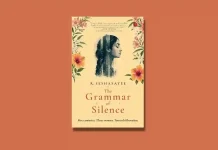
Book Title: Drown All the Refugees
Author: Tabish Khair
Publisher: HarperCollins India
Number of Pages: 248
ISBN: 9373075217
Date Published: Jun. 17, 2026
Price: INR 499

Book Excerpt
Chapter 3
Love Story
(pages 46-49)
If we were still at that sunset beach café in St. Martin, m’lord, I am sure I would discern traces of impatience and dissatisfaction on your refined face, with its high Roman nose, speckled grey hair, almost no sag in the jowls yet. You would make your displeasure felt with a certain stiffening of features, a slight arching of your eyebrows, maybe even a subdued snort. You would, then, object that while I claimed to be arguing about refugees and immigrants, I was actually talking only of the people they left behind. Maybe you’d refer to the tragedy still unfolding in Palestine: yes, I was watching the news those days too, back in 2024, when it still seemed new, though, of course, it had been happening in curtailed versions since 1948. You’d bring to my attention the sheer physical need for refuge, a word that, you’d tell me, denoted shelter in English and came from a Latin verb stressing the aspects of running away, fleeing. You’d quote moving poetry, for you are a famous writer.
Where are the journeys, you’d then demand. Where is the fleeing, the knees and arms pumping away, the hands bailing out? Where is the whole city running, the neighbours running faster than you? Where is the sweaty voice in your ear?
I could respond: That is part of the point, m’lord. That is the other side of the coin. Before one seeks refuge, one is bombed out of a shelter, a home, an inheritance, a past, a life, a possibility. No one leaves home unless home is the mouth of a shark, as the poet Warsan Shire, whom you quote in my imagination, puts it, though, honestly, there are millions like Pedro leaving, too, and perhaps what they are fleeing is not the jaws of a shark, but the endless nibbling of a school of piranha. Or, has the thought crossed your immaculate mind, perhaps they are fleeing into the jaws of another shark? But I have no wish to argue. Let me tell you instead about a refugee I knew intimately. A real refugee; a flesh-and-blood one. Someone who fled, and fled, and even after he had found shelter, as I have since discovered, kept fleeing.
By the way, I wonder: Have you ever known any refugee intimately? Have you touched a refugee’s face with your fingers, skin brushing against skin; laid your ears against his chest to listen to the running beat of his heart? Have you kissed a refugee’s face and tasted on your lips either the salt of his skin or the salt of dried tears, unable to distinguish between them?
I met Abdulla in the year I received tenure at my university. It was about two years after I had joined it, on my return from the USA. Abdulla was visible on the campus: he was one of the few ‘foreign faculty’. We are not an American or a British university, we are not even a university in Kolkata or Delhi, and we do not have many students or teachers from abroad. Abdulla was not from one of our neighbouring lands in the East, Bhutan, Bangladesh or Burma; he had crossed the breadth of our vast nation. He had fled to the wrong country perhaps, or what was now becoming the wrong country for him, a country that was disowning its own Muslim citizens with increasing rapidity. He had fled from Afghanistan, no less. And not just Afghanistan—his parents had been Palestinian refugees, among the 3,00,000 Palestinians displaced by the Israelis in 1967. He had no memories of the war, when he must have been three or four, and only faint ones of the next few years until the extended family found itself in Lebanon; then his parents, members of the Palestinian Communist Organization, gravitated to Afghanistan, where his father was offered a job at Kabul University.
‘It was a different Afghanistan,’ he often told me. ‘There used to be women in shorts and mini-skirts on its streets. And those days, only socialist and communist countries were really open to Palestinian refugees. My parents fit into Kabul; they were urbane, and they never had much to do with the Afghan countryside. I grew up an Afghan of a certain kind, a kind that’s almost—but not entirely, believe me, not entirely—extinct these days, despite the missiles supplied to the Mujahideen.’
Abdulla must have been the only faculty member from another country in my university, and he liked to make it visible at times by donning attire from his land—he considered himself an Afghan—a loose, flapping pair of pyjamas and a long shirt going down to his knees, all of one colour. In the winters, he wore a keffiyeh, the chequered black and white scarf that has come to be identified with the Palestinian struggle. He had retained a deep investment in the struggle, though not as a Muslim. It was more complicated than that.
I knew Abdulla was a lecturer in social anthropology, but since we had not spoken, I was surprised to see him among three colleagues and about half a dozen students who turned up for my confirmation lecture. He was dressed in a pair of faded blue jeans, and a loose shirt that camouflaged the belly, over which fell, in wavy cascades, the most resplendent beard on the university campus. It was still mostly black, speckled with grey, though later it would go white, so that I started calling him ‘Santa’ in English—for the image did not exactly carry, despite the universalizing influence of Hollywood, in my other languages.
Excerpted with permission from “Drown All the Refugees”, Tabish Khair, and HarperCollins India