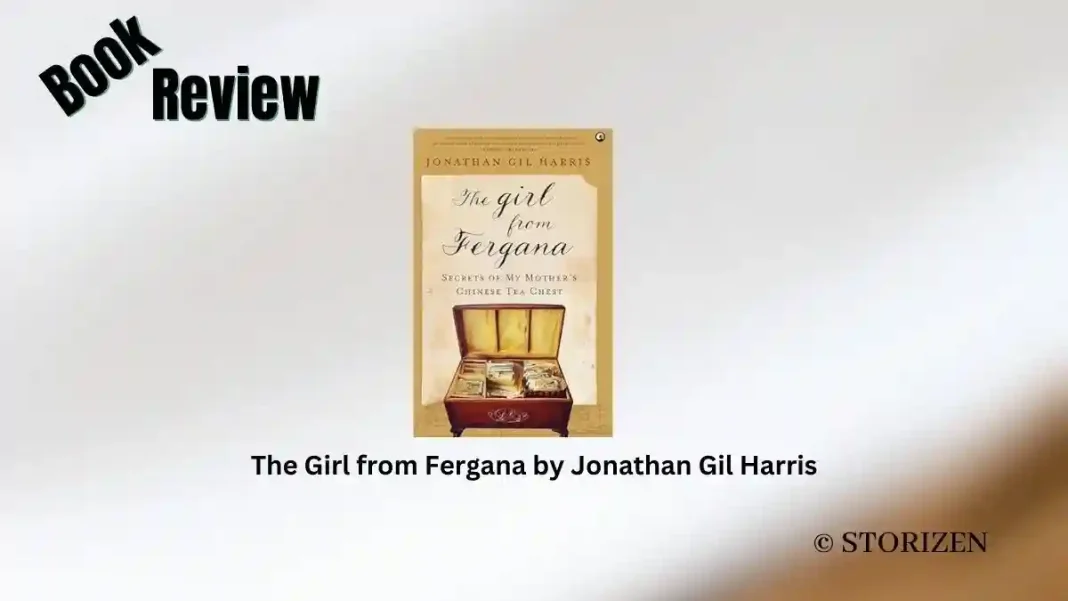
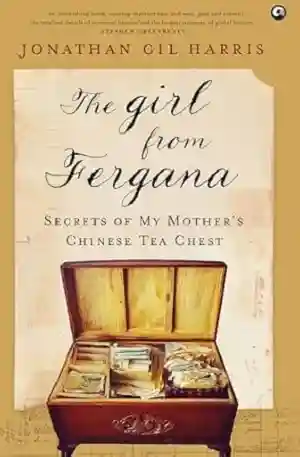
Book Title: The Girl from Fergana: Secrets of My Mother’s Chinese Tea Chest
Author: Jonathan Gil Harris
Publisher: Aleph Book Company
Number of Pages: 344
ISBN: 9365234700
Date Published: Jan. 10, 2026
Price: INR 663
Book Review
“The Girl from Fergana: Secrets of My Mother’s Chinese Tea Chest” by Jonathan Gil Harris is a moving blend of family memoir and forgotten history. Harris begins with his mother Stella’s childhood flight from Warsaw in 1939—a journey that takes her across war-torn Europe, past near-death encounters, and eventually to the Fergana Valley, a crossroads of the ancient Silk Roads. What starts as a story of escape and survival slowly widens into something larger: a meditation on lives lived across borders, and on worlds where cultures once met, mingled, and coexisted. Through Stella’s life, the book traces the long, often overlooked presence of Jewish communities along these routes, turning personal memory into a lens for global history.
Central to the book is the Chinese tea chest, a modest object packed with folded papers, documents, and keepsakes that hold an entire life within them. As Stella’s memories fade under Alzheimer’s, these fragments begin to speak—registration cards, letters, and slips of paper revealing how identity is shaped, altered, and constrained by war and bureaucracy. Harris connects his mother’s instinct to preserve these remnants with older traditions of safeguarding memory, such as the Jewish genizahs that stored texts crossing faiths and languages. The Silk Roads emerge not as a single route, but as a vast network of movement—of people, goods, beliefs, and stories—where trade in silk, tea, and spices carried ideas and identities alongside them.
Check out our Latest Book Reviews
The book also lingers on the fragile beauty of cosmopolitan life before it was fractured by borders and violence. Through stories of merchant families, shifting names, blended cultures, and multilingual homes, Harris shows how identities were layered rather than fixed. From pre-war Warsaw to Central Asia and beyond, the story holds together longing and loss, elegance and rupture. In unfolding his mother’s tea chest, Harris restores voices nearly erased by history, offering a quiet elegy to a connected world that once existed—and a reminder of how memory, when carefully preserved, can still travel across time and place.
Also Read: Book Review: ‘The Ghosts of Indian Small Towns’ by Ruskin Bond
Books are love!
Get a copy now!