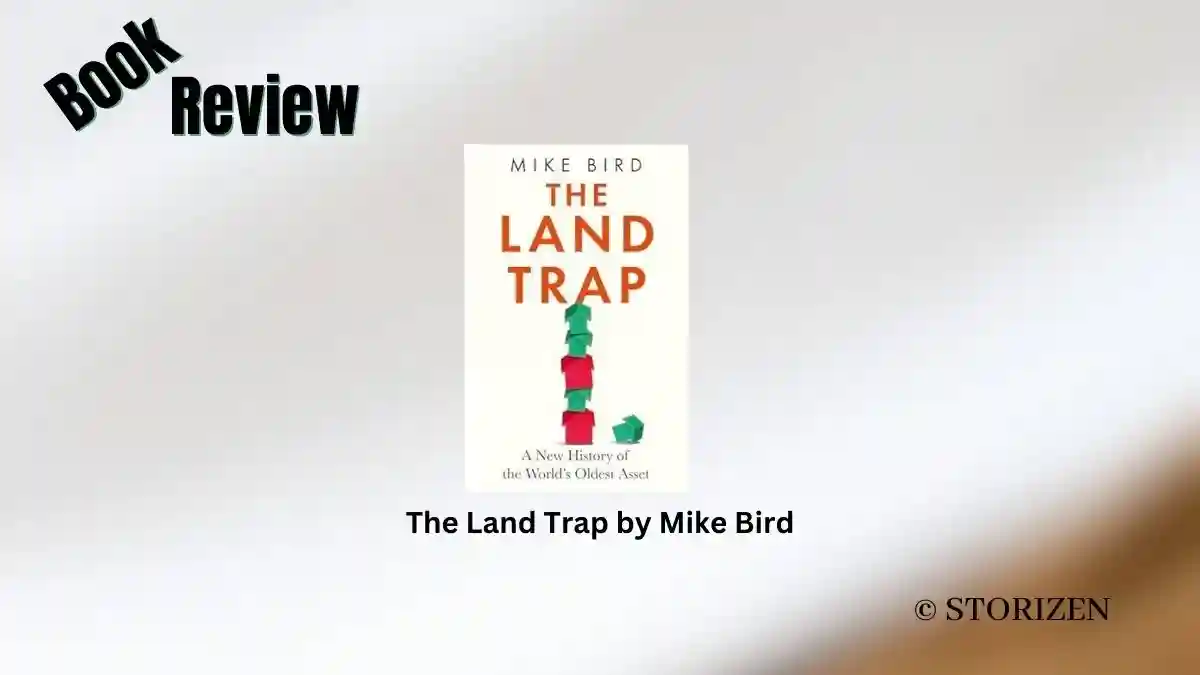
Book Title: The Land Trap: A New History of the World’s Oldest Asset
Author: Mike Bird
Publisher: Hodder Press
Number of Pages: 336
ISBN: 152915541X
Date Published: Nov. 4, 2025
Price: INR 2,300 / $23.13

Book Review
“The Land Trap: A New History of the World’s Oldest Asset” is a sharp and unsettling exploration of how land quietly underpins modern capitalism, shaping everything from housing prices to banking crises and geopolitical tensions. Mike Bird shows that land is not just a backdrop to economic history but the central stage, arguing that treating land as a financial asset has created a dangerous system that benefits a few while exposing societies to repeated shocks. The book is both accessible and deeply researched, making complex financial history feel urgent and concrete rather than abstract.
Author Mike Bird’s most powerful achievement is how he links three centuries of history into one clear story about land as the “hidden engine” of the global economy. He moves from colonial America, where land-backed credit helped build early banking systems, to the age of mass homeownership, where mortgages and rising house prices became the backbone of modern finance. In this telling, land is not simply valuable because it is scarce; it becomes the collateral that allows banks to expand credit, inflate asset prices, and, eventually, trigger crises when those prices stop rising. Bird shows how this logic plays out in places as different as Western housing markets and China’s contemporary real estate boom and slowdown, making it clear that “the land trap” is not a local problem but a global pattern.
Check out our Latest Book Reviews
At the same time, the book invites readers to question who gains and who loses when land is financialized. Bird argues that because land does not decay like machines or factories, those who own it can sit on appreciating wealth while others are pushed into debt just to secure housing, deepening inequality and locking societies into ever-riskier cycles of speculation. He also suggests that policymakers have been slow and often unwilling to confront this problem, since rising land and house prices can look like prosperity even as they store up future pain. The prose is clear and often vivid, but the implications are grim: unless governments rethink how land is taxed, regulated, and used, economies will remain vulnerable to the same old crashes, only on a larger scale.
As a critical study of power, wealth, and space, “The Land Trap” feels both timely and necessary, and it leaves the reader seeing the ground under their feet in a very different light.
Also Read: Book Review: ‘The Girl from Fergana’ by Jonathan Gil Harris
Books are love!
Get a copy now!