What happens when the life you imagined comes undone, and finding yourself again begins with the people who refuse to let you face it alone? In her debut novel, The Unwife Club, Akriti Tyagi explores the complicated aftermath of relationships, the uncertainties of starting over, and the quiet courage it takes to reclaim one’s identity. Centred on five women navigating heartbreak, personal struggles, societal expectations, and the demands of everyday life, the novel offers an honest, nuanced portrait of female friendship in all its warmth, humour, and imperfections.
Through characters who learn to make room for one another’s vulnerabilities without demanding easy answers, Tyagi examines what it means to rebuild a life on one’s own terms. In this exclusive cover story for Storizen Magazine, Akriti Tyagi reflects on the emotional beginnings of The Unwife Club, the making of its distinctive characters, the realities of writing women beyond familiar stereotypes, and the power of friendship to help us find our way back to ourselves.
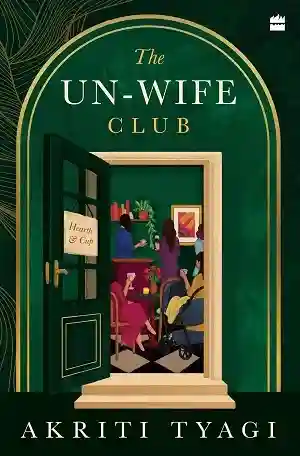
1. What was the emotional or thematic seed from which The Un-Wife Club first grew, and how did that idea evolve into this story of friendship, survival and self-reclamation?
The feeling at the heart of this book is that strange uncertainty after an ending, when people are asking how you are and you don’t even know who you are going to be now.
A relationship ends, but your attachment to the life you imagined doesn’t necessarily end with it. There are habits, hopes, little assumptions about the future that suddenly have nowhere to go. And alongside your own grief, there’s the exhausting business of explaining yourself to other people.
I wanted to spend time with women in that space. Women who could feel relief and loss in the same afternoon, who could know they deserved better and still miss someone who had hurt them.
The friendship gave those contradictions somewhere to exist. These women don’t demand a tidy account of one another’s lives. They make each other laugh, can disagree, get impatient, lose their temper, and still come back. That mattered to me. Sometimes you begin to find yourself again because someone keeps making room for you before you quite know how to occupy it.
2. How did you develop the women’s individual voices while creating a friendship that feels convincing across their differences?
There’s a part of me in all five women, but I wanted each of them to have the freedom to disagree with me, and with one another.
I thought about what each woman would be comfortable revealing, what she would dodge, and what might slip out before she could stop it. Mira’s instinct is to make people welcome, even when she’s struggling herself. Tara can make a joke that unsettles the whole table. Simran is accustomed to being capable and precise. Izna has to find the confidence to believe her words deserve space. Amaya is dealing with needs so immediate that there isn’t always time to process her own.
Their differences affect how they give care, too. Advice that feels practical to one woman can feel unbearable to another. A joke can be an invitation or land badly. I wanted room for those misreadings.
Friendship becomes convincing, for me, when people start learning how to care for someone who doesn’t need exactly what they would need. These women don’t arrive knowing how to do that. They learn by staying in the conversation.
3. Why place their emotional refuge inside a financially vulnerable business, rather than make it an uncomplicated safe haven?
Because I wanted the café to feel like a place someone actually has to open every morning.
It’s easy to fall in love with the idea of a warm café: the coffee, the familiar table, the person who notices you’ve had a difficult day. But someone is paying for that warmth. Someone is checking the bills and wondering whether enough customers will come in.
For Mira, Hearth and Cup holds so much of what she wants to build. Its financial vulnerability means she can’t simply settle into the role of the woman who looks after everyone else. She needs support herself. I found that important, because the person creating a refuge can become invisible inside it.
I also didn’t want starting over to look available only to people who can afford to put ordinary life on hold. These women have responsibilities. Their emotional lives unfold alongside them. You can have a moment of real hope and then remember an overdue payment.
Both belong in the story.
RELATED: ‘The Un-Wife Club’ by Akriti Tyagi
4. How did you navigate Simran’s conflict without reinforcing the idea that a woman’s achievements are incomplete without marriage and children?
I wanted to make a distinction between what Simran genuinely wants and what she has been told she ought to want. Those things can become painfully tangled.
A woman can be proud of her work and grieve a relationship. She can want children without believing every woman should have them. She can question decisions she has made without accepting someone else’s verdict that her entire life has been a mistake.
What feels unfair is how quickly a successful woman’s sadness becomes evidence against her ambition. If she admits she’s lonely, someone is ready to say, “Well, you chose your career.” As though people who make different choices are guaranteed companionship.
I wanted Simran to be allowed a full emotional life. She doesn’t have to be permanently fulfilled to justify her achievements. Nor does she have to dismiss her longing to prove she’s independent. I recognise that desire to be strong without having every vulnerable moment used to question the life you’ve built. You should have the independence to choose the life you want to lead, even if it leads to heartbreak at some point.
I’ve spent much of my professional life working with stories, first in television and then in publishing. Over time, I became increasingly interested in what people leave out of the stories they tell about themselves.
Akriti Tyagi
5. How did you decide when laughter could deepen a scene and when it risked softening the seriousness of what the women had endured?
I paid attention to who the joke belonged to, and who might be hurt by it.
There’s something very intimate about being able to laugh with someone who knows what happened to you. You don’t have to provide the whole history first. They understand why something is absurd, why you’re angry, why laughing might be the only way you can get through telling it.
But that permission isn’t automatic. One woman being ready to joke doesn’t mean everyone else is ready to hear it. I wanted the humour to retain that sensitivity.
The wedding-reception disaster, the divorce registry, and the “Un-Anniversary” plans also give the women opportunities to be ridiculous together. That’s part of friendship I love. You can have a serious conversation and, ten minutes later, become deeply invested in an outrageous idea.
I didn’t want their suffering to take away their personalities. They’re still mischievous, sharp, occasionally unreasonable women. Laughter lets the reader know them beyond what happened in their relationships.
6. How did you approach Izna’s recovery without suggesting that leaving an abusive marriage immediately resolves its emotional aftermath?
It mattered to me that leaving could be a decisive act without making everything afterwards simple.
When you’ve been made to doubt your judgement, having the freedom to choose can itself feel frightening. When every iota of your confidence has been shredded to pieces, having the courage to stand up for yourself may as well feel like going to war with the voices inside your head telling you to do otherwise. There can be a long distance between being told you’re safe and beginning to feel safe. I wanted to respect that distance in Izna’s story.
Earning money and setting boundaries have practical consequences, but they also change her relationship with herself. She gets opportunities to discover that she can make a decision, hold to it, and survive someone else’s displeasure. Those moments deserve attention even when they don’t look dramatic.
Her movement towards comedy felt especially meaningful because it gives her some control over how she is heard. She can decide what to reveal and how to tell it. But I didn’t want finding her voice to mean she would never struggle again.
What moves me about Izna is that her tenderness survives. As she becomes more able to protect herself, she still has the capacity to reach towards other people.
RELATED: Storizen Magazine October 2026 Issue Out Now: The Stories We Never Told ft. Akriti Tyagi
7. What first made you want to write fiction, and which writers or books have most influenced the storyteller you are becoming?
These literary references fit the themes beautifully; keep the ones that reflect your own reading.
I’ve spent much of my professional life working with stories, first in television and then in publishing. Over time, I became increasingly interested in what people leave out of the stories they tell about themselves. The answer they give at dinner, and the thought they have on the drive home. Fiction lets you follow them into that private space.
For this book, I wanted to explore women whose outward lives don’t tell you everything. Someone can be accomplished and still feel painfully unsure of her worth. She can love the people around her and resent what they expect of her. Those contradictions feel very human to me.
Among the literary voices I’m drawn to is Ismat Chughtai, particularly the candour of The Crooked Line. There’s something liberating about writing women with appetites, difficult feelings and inconvenient questions, without constantly seeking permission on their behalf. Elena Ferrante’s Neapolitan novels offer another kind of honesty: female friendship can contain devotion, rivalry, resentment and an intimacy that survives all three. That gives you so much more to work with than an idealised account of sisterhood.
I also admire Jhumpa Lahiri’sInterpreter of Maladies for how much emotional weight an ordinary exchange or domestic detail can carry. And Doris Lessing’s The Golden Notebook takes seriously the difficulty of holding together the different parts of a woman’s life: work, love, friendship, political convictions, her understanding of herself.
What draws me to these writers is the room they give women to be complicated. A character doesn’t have to be admirable in every scene for us to care deeply about her. That’s something I want to keep learning as a writer: how to stay close to someone even when she’s behaving badly, contradicting herself, or struggling to admit what she wants. Often, that’s where she becomes most recognisable.
There’s something very intimate about being able to laugh with someone who knows what happened to you. You don’t have to provide the whole history first.
Akriti Tyagi
8. What does your writing process look like when a story resists you, and how do you decide whether to keep revising a difficult scene or take it in a new direction?
Usually, there’s a fair amount of arguing with myself! I can get attached to a sentence or an exchange and keep trying to make the scene work around it. Eventually, I have to ask whether I’m saving it because it belongs there or because I’m pleased I wrote it.
The difficult thing with these five women is that they all carry something of me. I have strong feelings about what they’re going through.
Sometimes I want one of them to say the thing I wish I’d said in a similar situation, with all the clarity that only arrives much later. But would she actually have those words in that moment? Or would she go quiet, make a joke, pick a fight about something else entirely?
That’s often where I need to reconsider a scene. An argument, for instance, can look very satisfying on the page when everyone gets to make their point. In life, you forget the most important thing you wanted to say. You get stuck on one careless remark. You think of your best response while brushing your teeth that night. I want some of that awkwardness in the writing.
If I believe the exchange but it feels clumsy, I’ll keep revising. If I’m having to explain to myself why a woman would behave that way, I probably need to change direction. And sometimes I need to leave it alone for a while. Coming back makes it easier to spot the bit I’ve been stubborn about.
I’m still learning to let go of writing I like when it gets in the way of someone I want the reader to believe.
About the Author

Akriti Tyagi has been drawn to books and storytelling since childhood, finding ways to write for as long as she can remember. An all-India topper at Delhi University, she holds a master’s degree from the University of Westminster in London and has also studied corporate communication at Cornell University in New York.
She currently serves as Director of Strategic Communications at the Council on Energy, Environment and Water (CEEW), one of Asia’s leading policy research institutions. Before joining CEEW, Akriti spent more than eight years at HarperCollins India, where she led marketing and communications. This followed a twelve-year career in television and media with NDTV.
A passionate reader and traveller, Akriti has explored more than forty countries, gathering experiences, friendships, and insights into the decisions that influence our lives. The Un-Wife Club marks her debut as a novelist.