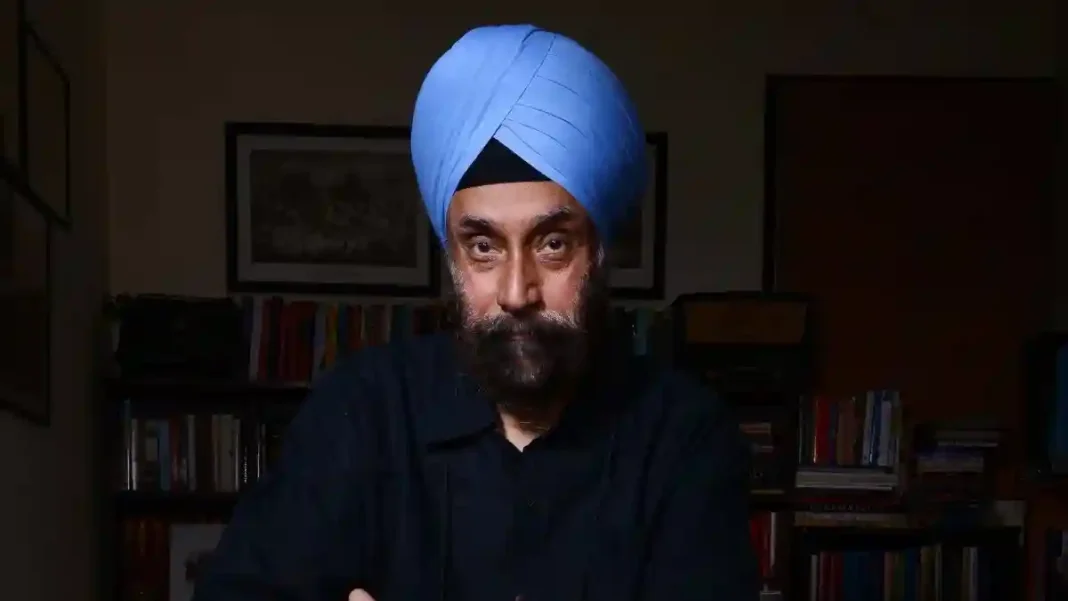
In this special feature for Storizen Magazine – February 2026, we are honoured to present a thoughtful conversation with Navtej Sarna, author of A Flag to Live and Die For: A Short History of India’s Tricolour. With a historian’s depth and a diplomat’s global perspective, Sarna traces the Indian tricolour’s extraordinary journey — from ancient civilizational symbols to its emergence as the sovereign emblem of a modern republic. Reflecting on figures like Pingali Venkayya and Mahatma Gandhi, pivotal moments such as the Quit India Movement, and the decisive debates within the Constituent Assembly of India, this interview explores how a banner of protest evolved into a sacred national symbol. We also delve into his wider literary works, including The Exile and Crimson Spring, and reflect on how his diplomatic career and writings for publications such as The Week and The Hindu continue to inform and enrich one another.
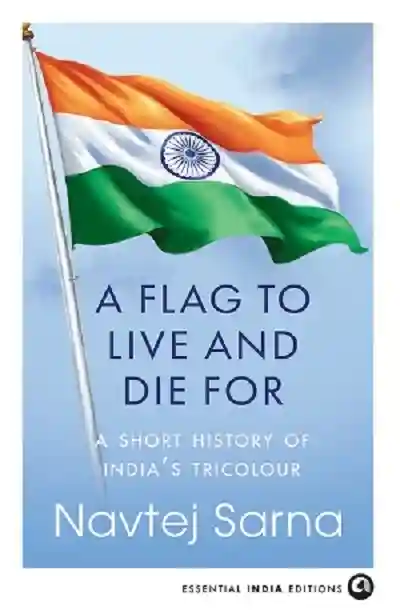
Your book traces the tricolour’s roots back to ancient symbols in epics like the Mahabharata—could you share what inspired you to begin there and how these early references shaped the flag’s evolution into a modern emblem?
It was important to set the national flag in a historical context and to examine first of all what a flag, or a pennant, has traditionally meant in India. Looking at flags in the ancient epics or in ancient and medieval India helped to distinguishour traditions from the European traditions of heraldry. We also see through this brief historical journey the transition from religious symbolism to more universalist ideas.

Sri Pingali Venkayya’s 1921 design and Mahatma Gandhi’s refinements, including the charkha, played pivotal roles in unifying communities. How did you approach narrating this transformation from communal colours to universal ideals like courage, truth, and faith?
Well, I simply had to follow the debates and declarations of those who were involved in designing the flag and modifying it. In many ways this debate reflects the broader inter-communal relations at different stages of our freedom struggle. In 1921, Mahatma Gandhi initially gave a fully communal meaning to the colours in his first Swaraj flag, not in order to divide communities but rather to unify them in one revered symbol. By the end of the 1920s, relations between communities had deteriorated while the flag had become increasingly important as a symbol of the national struggle. It was expedient then to give a more universalist interpretation to the colours in terms of Indian values like truth, courage, sacrifice and so on.
The Nagpur Flag Satyagraha and other protests vividly illustrate the tricolour as a symbol of resistance—could you reflect on the most compelling anecdotes from these events that highlight the flag’s power in mobilizing the masses against British authority?
The Nagpur, and before that the Jabalpur, Flag Satyagraha in 1923 represents a very important phase in the recognition of the flag as a symbol of resistance. We must remember that the flag had that time not yet been adopted by any resolution of the Congress. It was powerful because it was backed by Gandhi. The satyagraha was motivated by a desire on the part of the people who had owned the flag to have the right to march with it. The more the authorites cracked down, the stronger became this resolution. People marched with it and courted arrest willingly without breaking into violence- this was also in keeping with the example set by the Akalis in their non-violent protests for the reform of the Gurudwaras.
Later, in the 30s, clashes with authorities over the right to fly the flag intensified. One of the most dramatic incidents took place during the 1942 Quit India movement when seven students were shot dead by the police while attempting to hoist the flag over the Patna Secretariat.
Also Read: 9 Short Books You Can Finish in One Sitting That Will Stay With You Forever
From the 1931 Congress debates to the 1947 Constituent Assembly’s final choice of the Ashoka Chakra over the charkha, your book captures tensions like Gandhi’s reservations—what insights do you hope readers gain today about the flag’s journey from protest to sacred sovereign symbol?
Yes, the journey of the development of the symbol was not without tensions. First there was the tension regarding the colours and their placement. Then there was the tension between the tricolour and the Union Jack, between the tricolour and the religious flags, the communist flag and that of the Muslim League and of course, the princely flags. Finally, there was also the critical change from the charkha to the chakra, and this is detailed in the book. This was seen, without losing the values associated with the charkha, as part of the change of the symbol from being a flag of resistance to a flag of a modern republic.
I hope the readers will appreciate that the tricolour was not given to us wholly made and adopted without reservation. It went through an intense examination and debate and its journey is marked by great sacrifices on the path to freedom.

What drew you to write historical novels like ‘The Exile’ about Maharaja Duleep Singh and ‘Crimson Spring’ on the Jallianwala Bagh massacre, and how does your Punjabi literary family heritage influence your storytelling?
Each of those books involved stories that I deeply felt needed to be told. Both those books, though based on historical facts and events were framed as novels which allowed me to delve deeper into the emotional and psychological dimensions of the personalities involved.
Maharaja Duleep Singh, for instance, had not been examined earlier with a sympathetic eye but was reduced to a footnote in history books or patronized by writers with an imperial slant. Crimson Spring is about Jallianwala Bagh but not only: it tries to capture life in an undivided Punjab with a shared history and a complete geography. It also brings in the various historical streams which were running in parallel at that time – revolutionaries, ghadar movement, the Singh Sabha movement and the gurudwara reform, the freedom movement and so on. Of course it is natural that I should be influenced by the strong Punjabi literary heritage of my family with both my parents having written extensively on Punjab – its history, culture and its partition.
Also Read: Book Review: ‘Unfolding’ by Rahul Singh
As a retired diplomat now focused on writing and columns for publications like The Week Hindu, how do you see the interplay between your diplomatic career and your literary pursuits enriching each other?
My diplomatic career and literary pursuits have happily coexisted for decades. In fact they have gained greatly from each other. Diplomacy, with its travel and exposure to different lands, people and cultures, helped me expand my mental horizons and I feel it enriched my writing. Similarly being a writer brought a certain sensibility of a different kind to my diplomatic interactions and opened doors that may have otherwise not been accessible.